Every card with both a recent raw near-mint price and recent Grade 9 and Grade 10 sales, priced against what grading it would actually cost and pay back. One question, card by card: does sending this in make money — at this card’s own PSA-10 rate where enough copies have been graded to measure one (Adjusted EV), and at the average card’s 35/35/15 split where they have not.
| Gem × | $10 | $20 | $30 | $40 | $50 | $60 | $70 | $80 | $90 | $100 | $200 | $300 | $400 | $500 | $750 | $1,000+ |
|---|---|---|---|---|---|---|---|---|---|---|---|---|---|---|---|---|
| 30×+ | ||||||||||||||||
| 15–30× | ||||||||||||||||
| 10–15× | ||||||||||||||||
| 6–10× | ||||||||||||||||
| 4–6× | ||||||||||||||||
| 2–4× |
Few sales
Hatched = no qualifying card- 0
- 4
- 25
- 135
- 700
- 3.6k
Each square is a price bucket, brighter where more graded copies actually sell. The legend prints the sales count every shade starts at.
Hover, tab or click a square for its cards, its EV and what pays off — click pins the panel open
Card by card
Each dot is one card. The shaded band above the curve approximates where grading is EV-positive on the Grade 10 term alone, at the stated prior — a card's own Grade 9 price, and its own graded population where the platform has one on file, can move its true best-evidence EV either side of this curve. The board's own EV column is the figure that actually counts.
- Vintage
- Classic
- Mid
- Modern
- EV-positive band · Grade 10 term, at the prior
- Faded dot · thin evidence
The same cards, one dot each. Hover a dot for its prices and expected value. Inside the green band, a Grade 10 alone clears the fee.
Every card, by expected value
No capShowing 10 of 10
| Position in this view. Click to go back to the default order, best EV first. | Card image | The card, its era, and any honesty flags on its evidence. | Raw: average sale price over the last 6 months; the small number is how many sales. | Grade 10: average sale price over the last 6 months; the small number is how many sales. | Grade 9: average sale price over the last 6 months; the small number is how many sales. | How often a graded copy of this card came back a PSA 10, out of every graded copy on file. | PSA 10 price ÷ raw price. 5× means a 10 sells for five times the raw card. | Adjusted EV: expected profit using this card’s own PSA-10 rate from its graded population. Cards with under 20 graded fall back to the average-card assumption and are flagged Prior. | EV (average card): assumes every card grades like an average one — 35% PSA 10, 35% 9, 15% 8. | Actions |
|---|---|---|---|---|---|---|---|---|---|---|
| 1 |  | MewtwoMewtwoBase SetBuy raw for $360. Pay about $60 to grade it. Roughly 35% get a PSA 10 (sells ≈ $13.3k), 35% a PSA 9 (≈ $1.4k), 15% an 8 (≈ $500). Expected result: +$4.8k.We don’t know this card’s own 10-rate yet (under 20 graded), so this uses the average split: 35% / 35% / 15%.VintageThinFewer than 5 sales in at least one of raw / PSA 9 / PSA 10 over the window, so the prices are shaky.PriorUnder 20 graded copies, so we assumed the average 35/35/15 grade split instead of this card’s own rate. PSA populations aren’t split by finish for this card yet, so we don’t use them. | $360 (2) | $13.3k (5) | $1.4k (18) | —Fewer than 20 graded, so we can’t measure this card’s own 10-rate yet — or this card has more than one finish and PSA populations aren’t split by finish yet. | 36.9× | +$4.8k | +$4.8k | Pre-gradePre-grade your copy of Mewtwo: centering, wear and grade odds from two photos. An estimate, not a grade.TCG |
| 2 |  | PichuPichuNeo GenesisBuy raw for $135. Pay about $60 to grade it. Roughly 35% get a PSA 10 (sells ≈ $13.3k), 35% a PSA 9 (≈ $550), 15% an 8 (≈ $214). Expected result: +$4.7k.We don’t know this card’s own 10-rate yet (under 20 graded), so this uses the average split: 35% / 35% / 15%.VintageThinFewer than 5 sales in at least one of raw / PSA 9 / PSA 10 over the window, so the prices are shaky.PriorUnder 20 graded copies, so we assumed the average 35/35/15 grade split instead of this card’s own rate. PSA populations aren’t split by finish for this card yet, so we don’t use them. | $135 (3) | $13.3k (4) | $550 (23) | —Fewer than 20 graded, so we can’t measure this card’s own 10-rate yet — or this card has more than one finish and PSA populations aren’t split by finish yet. | 98.7× | +$4.7k | +$4.7k | Pre-gradePre-grade your copy of Pichu: centering, wear and grade odds from two photos. An estimate, not a grade.TCG |
| 3 | 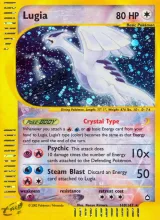 | LugiaLugiaAquapolisBuy raw for $4.0k. Pay about $349 to grade it. Roughly 4% get a PSA 10 (sells ≈ $81.1k), 15% a PSA 9 (≈ $19.1k), 14% an 8 (≈ $11.4k). Expected result: +$2.9k.VintageThinFewer than 5 sales in at least one of raw / PSA 9 / PSA 10 over the window, so the prices are shaky. | $4.0k (3) | $81.1k (9) | $19.1k (29) | 4% of 3,912 | 20.3× | +$2.9k | +$32.4k | Pre-gradePre-grade your copy of Lugia: centering, wear and grade odds from two photos. An estimate, not a grade.TCG |
| 4 | 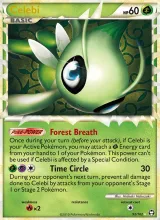 | CelebiCelebiTriumphantBuy raw for $114. Pay about $60 to grade it. Roughly 35% get a PSA 10 (sells ≈ $7.7k), 35% a PSA 9 (≈ $815), 15% an 8 (≈ $321). Expected result: +$2.9k.We don’t know this card’s own 10-rate yet (under 20 graded), so this uses the average split: 35% / 35% / 15%.ClassicPriorUnder 20 graded copies, so we assumed the average 35/35/15 grade split instead of this card’s own rate. PSA populations aren’t split by finish for this card yet, so we don’t use them. | $114 (21) | $7.7k (25) | $815 (45) | —Fewer than 20 graded, so we can’t measure this card’s own 10-rate yet — or this card has more than one finish and PSA populations aren’t split by finish yet. | 67.5× | +$2.9k | +$2.9k | Pre-gradePre-grade your copy of Celebi: centering, wear and grade odds from two photos. An estimate, not a grade.TCG |
| 5 | | PichuPichuNeo GenesisBuy raw for $319. Pay about $60 to grade it. Roughly 35% get a PSA 10 (sells ≈ $7.2k), 35% a PSA 9 (≈ $1.4k), 15% an 8 (≈ $706). Expected result: +$2.8k.We don’t know this card’s own 10-rate yet (under 20 graded), so this uses the average split: 35% / 35% / 15%.VintageThinFewer than 5 sales in at least one of raw / PSA 9 / PSA 10 over the window, so the prices are shaky.PriorUnder 20 graded copies, so we assumed the average 35/35/15 grade split instead of this card’s own rate. PSA populations aren’t split by finish for this card yet, so we don’t use them. | $319 (2) | $7.2k (6) | $1.4k (44) | —Fewer than 20 graded, so we can’t measure this card’s own 10-rate yet — or this card has more than one finish and PSA populations aren’t split by finish yet. | 22.7× | +$2.8k | +$2.8k | Pre-gradePre-grade your copy of Pichu: centering, wear and grade odds from two photos. An estimate, not a grade.TCG |
| 6 | 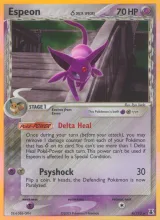 | Espeon δEspeon δDelta SpeciesBuy raw for $295. Pay about $60 to grade it. Roughly 35% get a PSA 10 (sells ≈ $7.9k), 35% a PSA 9 (≈ $750), 15% an 8 (≈ $505). Expected result: +$2.7k.We don’t know this card’s own 10-rate yet (under 20 graded), so this uses the average split: 35% / 35% / 15%.ClassicThinFewer than 5 sales in at least one of raw / PSA 9 / PSA 10 over the window, so the prices are shaky.PriorUnder 20 graded copies, so we assumed the average 35/35/15 grade split instead of this card’s own rate. PSA populations aren’t split by finish for this card yet, so we don’t use them. | $295 (3) | $7.9k (13) | $750 (11) | —Fewer than 20 graded, so we can’t measure this card’s own 10-rate yet — or this card has more than one finish and PSA populations aren’t split by finish yet. | 26.8× | +$2.7k | +$2.7k | Pre-gradePre-grade your copy of Espeon δ: centering, wear and grade odds from two photos. An estimate, not a grade.TCG |
| 7 |  | Latias & Latios GXLatias & Latios GXTeam UpBuy raw for $4.9k. Pay about $349 to grade it. Roughly 36% get a PSA 10 (sells ≈ $15.0k), 30% a PSA 9 (≈ $5.5k), 18% an 8 (≈ $3.6k). Expected result: +$2.5k.MidThinFewer than 5 sales in at least one of raw / PSA 9 / PSA 10 over the window, so the prices are shaky. | $4.9k (3) | $15.0k (61) | $5.5k (33) | 36% of 7,182 | 3.1× | +$2.5k | +$2.5k | Pre-gradePre-grade your copy of Latias & Latios GX: centering, wear and grade odds from two photos. An estimate, not a grade.TCG |
| 8 | 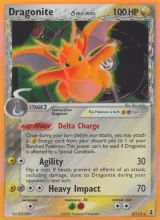 | Dragonite δDragonite δDelta SpeciesBuy raw for $466. Pay about $60 to grade it. Roughly 35% get a PSA 10 (sells ≈ $6.8k), 35% a PSA 9 (≈ $1.4k), 15% an 8 (≈ $599). Expected result: +$2.4k.We don’t know this card’s own 10-rate yet (under 20 graded), so this uses the average split: 35% / 35% / 15%.ClassicThinFewer than 5 sales in at least one of raw / PSA 9 / PSA 10 over the window, so the prices are shaky.PriorUnder 20 graded copies, so we assumed the average 35/35/15 grade split instead of this card’s own rate. PSA populations aren’t split by finish for this card yet, so we don’t use them. | $466 (2) | $6.8k (9) | $1.4k (9) | —Fewer than 20 graded, so we can’t measure this card’s own 10-rate yet — or this card has more than one finish and PSA populations aren’t split by finish yet. | 14.6× | +$2.4k | +$2.4k | Pre-gradePre-grade your copy of Dragonite δ: centering, wear and grade odds from two photos. An estimate, not a grade.TCG |
| 9 |  | BlastoiseBlastoiseBase SetBuy raw for $224. Pay about $60 to grade it. Roughly 35% get a PSA 10 (sells ≈ $6.5k), 35% a PSA 9 (≈ $990), 15% an 8 (≈ $371). Expected result: +$2.4k.We don’t know this card’s own 10-rate yet (under 20 graded), so this uses the average split: 35% / 35% / 15%.VintagePriorUnder 20 graded copies, so we assumed the average 35/35/15 grade split instead of this card’s own rate. PSA populations aren’t split by finish for this card yet, so we don’t use them. | $224 (20) | $6.5k (27) | $990 (61) | —Fewer than 20 graded, so we can’t measure this card’s own 10-rate yet — or this card has more than one finish and PSA populations aren’t split by finish yet. | 29.1× | +$2.4k | +$2.4k | Pre-gradePre-grade your copy of Blastoise: centering, wear and grade odds from two photos. An estimate, not a grade.TCG |
| 10 | 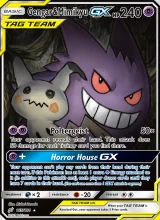 | Gengar & Mimikyu GXGengar & Mimikyu GXTeam UpBuy raw for $1.9k. Pay about $199 to grade it. Roughly 42% get a PSA 10 (sells ≈ $7.5k), 32% a PSA 9 (≈ $2.7k), 14% an 8 (≈ $1.5k). Expected result: +$2.2k.MidThinFewer than 5 sales in at least one of raw / PSA 9 / PSA 10 over the window, so the prices are shaky. | $1.9k (4) | $7.5k (71) | $2.7k (34) | 42% of 5,308 | 3.9× | +$2.2k | +$1.7k | Pre-gradePre-grade your copy of Gengar & Mimikyu GX: centering, wear and grade odds from two photos. An estimate, not a grade.TCG |
By era group
| Era group | Cards | Median gem × | EV-positive |
|---|---|---|---|
| Vintage | 343 | 24.3× | 77% |
| Classic | 158 | 21.9× | 80% |
| Mid | 634 | 16.7× | 78% |
| Modern | 2380 | 14.0× | 17% |
Method & caveats
Built by a weekly pipeline step, Sunday night (last run 2026-10-26), never read live: a card needs at least 3 admitted sales at BOTH Grade 9 and Grade 10 to appear at all. Cards are ranked, and the headline chosen, by Adjusted EV: each card's own graded population, when there is enough of it on file, otherwise EV (average card) — the named prior (35% Grade 10 / 35% Grade 9 / 15% Grade 8, a stated modelling assumption, not fitted data, used ONLY as a fallback) — and PSA's own billed fee for the card's raw price as its declared value. The grid's own switch lets a reader put every card on the average-card split for comparison.
A thin-evidence or prior-only row is flagged, never hidden. The full method below.
Questions
What does the heatmap show?
Each square crosses one raw-price bucket (across) with one Grade 10 multiple band (down): a $35 card whose Grade 10 sells for $245 sits in the $30 column, 6–10× row. The shade is 12 months of Grade 9 and Grade 10 sales. Hover any square for its three best cards.
Why shade by sales volume rather than by profit?
Because a slab you cannot sell has not made money. A square can look profitable and trade twice a year. Volume says how many graded copies in that price and multiple range actually changed hands over the last year, so the EV beside it is a bet you could really place.
Why is 2–4× at $1,000+ still EV-positive?
Because the fee is flat and the multiple is a ratio. On a $20 card, 3× is $60 and PSA’s $79.99 sinks it. On a $1,000 card, the same 3× is $3,000 and the fee is under three percent. Low multiples pay at high prices, not at low ones.
What does "where the money is" mean?
The matrix square with the highest share of EV-positive cards, among squares holding at least 10 cards and 100 graded sales in the last year. Right now: $200–300 raw at 2–4×, where 100% of 22 cards are EV-positive on 5,348 graded sales.
What does "expected value" mean here?
EV = Σ P(grade) × graded price − raw price − grading fee: the probability-weighted graded payout, minus what the raw card and the submission actually cost. A card needs a priced Grade 9 AND Grade 10 sale to be scored at all; a Grade 8 sale adds a third term when the data has one, never a substitute for a missing one. The grid ranks, and the headline is chosen, by ADJUSTED EV — this card’s own PSA-10 rate where its graded population supports one, never the average-card figure alone when the card has a real population-implied one.
Method
What this measures
Every admitted, single-unit, English sale on a RAW/near-mint or GRADED instrument over the trailing 6 months — never a screened, price-refused or removal-hypothesis row (CLAUDE.md's "a vanished listing is never automatically a sale"). A card needs at least 2 raw sales and 3 sales at BOTH Grade 9 and Grade 10 (pooled across every grader this platform tracks — PSA, CGC, BGS, SGC, TAG, ACE — the same tier bands Graded Index uses) to be priced at all; a Grade 8 sale, when present, adds a third term. Below 5 sales on any required tier, the row still publishes, flagged thin.
Expected value
EV = Σ P(grade) × graded price − raw price − grading fee. The sum runs only over tiers this card has a PRICED sale for — Grade 10 and Grade 9 always, Grade 8 only when the data has it — so a card with no Grade 8 sale gets a deliberately conservative (lower-bound) EV rather than a fabricated third term. The fee is PSA's own currently-open, billed tier for the card's raw price as its declared value; a raw price above every open tier's cap still uses the cheapest reachable one, flagged "Over cap".
The two probability sources: Adjusted EV and EV (average card)
EV at the population uses this card's OWN graded population (D-234's population_observations, summed per grade band across every grader) when the total clears 20 graded copies. EV at the prior instead uses a stated, generic assumption — 35% Grade 10, 35% Grade 9, 15% Grade 8 — shaped by the same survivorship logic the per-card grading panel elsewhere on this platform documents (only cards worth grading get submitted, which skews the population that exists toward the top of the scale), NOT fitted to this platform's data; below the population floor, or with no population on file at all, the row is flagged "Prior", its Adjusted EV falls back to that split, and the grid's own gem-rate column shows an em dash rather than a percentage — never a fabricated share standing in for missing evidence.
The grid ranks, headlines and shades by ADJUSTED EV — coalesce(EV at the population, EV at the prior) — never by EV (average card) alone (2026-09-13 addendum): a card's own population is always preferred over the generic prior when it clears the floor. A card is never left to lead the grid on a fabricated-prior figure its own population evidence would contradict. A reader can still put every card on the average-card split with the grid's own switch; that changes what is SHOWN, never what was computed.
As of 2026-10-26 · built 2026-10-26