Four baskets, one per era group: the fifty Grade 10 cards each era actually trades, equal-weighted, chain-linked week by week and rebased to 100 at a common start. A basket asks the question a single price cannot — has this era of graded cardboard gained or lost ground, and is the premium over a raw copy still widening.
Leading era, 30 days
Mid +20.7% — the strongest Grade 10 basket this month.
Graded premium trend
Premium expanding: the median era is +4.3% over raw in 30 days.
Breadth
38 of 102 measurable constituents are up over 30 days.
Updated weekly, Sunday night · through 2026-10-26
Current ranks
- 1Mid50 cards priced301.5+20.7%
- 2Classic48 cards priced173.7+11.8%
- 3Vintage50 cards priced168.1+20.6%
- 4
Graded Index by Era constituents
The 50 most actively traded Grade 10 cards in each era, equal-weighted. Price is the trailing-90-day median from that card’s most-traded grader; a move needs three of that grader’s sales on each side of 30 days, and a card under 5 sales in 90 days is thin evidence for its own price.
| Image | Card | Era | Set | Series | |||
|---|---|---|---|---|---|---|---|
| 1 | 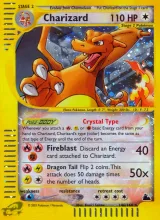 | Charizard | $169,999.00 | Vintage | Skyridge | WOTC | — |
| 2 |  | Umbreon | $128,000.00 | Vintage | Skyridge | WOTC | +39.5% |
| 3 |  | Mewtwo | $192,000.00 | Vintage | Expedition Base Set | WOTC | — |
| 4 | 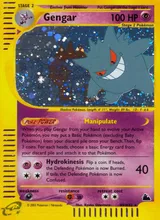 | Gengar | $19,999.50 | Vintage | Skyridge | WOTC | +175.0% |
| 5 | 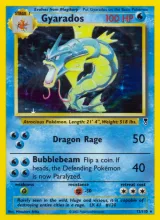 | Gyarados | $757.50 | Vintage | Legendary Collection | WOTC | — |
| 6 | 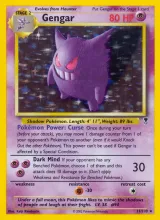 | Gengar | $5,000.00 | Vintage | Legendary Collection | WOTC | — |
| 7 |  | Pikachu | $13,901.01 | Vintage | Legendary Collection | WOTC | — |
| 8 |  | Lugia | $148,511.00 | Vintage | Aquapolis | WOTC | — |
| 9 |  | Gyarados | $5,806.00 | Vintage | Skyridge | WOTC | +100.0% |
| 10 | 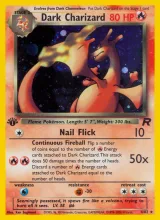 | Dark Charizard | $4,320.00 | Vintage | Team Rocket | WOTC | -16.8% |
Population pressure — biggest Grade 10 supplies in the baskets
| Card | Era | Grade 10 pop | Price | Pop / yr |
|---|---|---|---|---|
| Pikachu with Grey Felt HatSVP Black Star Promos | Modern | 56,350 | $2,500.00 | — |
| Moltres & Zapdos & Articuno GXSM Black Star Promos | Mid | 53,787 | $410.00 | — |
Method & caveats
Updated weekly, Sunday night — last built 2026-10-26 — and never read live: a graded card's only priced evidence is an admitted sale, and scanning years of them on every request is the read that hit this database's statement timeout in production. The index is weekly by construction, so a nightly rebuild would republish the same numbers at six times the cost. Every figure on this page comes from that one build.
A week in which fewer than 20 of an era's cards carried a price is left blank, not filled in, and a week's move is dropped rather than published when too few cards traded on both sides of it — which is why a line can break and resume. The full method below.
Questions
What is the Graded Index?
Four baskets, one per era group. Each holds the 50 Grade 10 cards that era traded the most money in, equal-weighted. The level is chain-linked week to week and rebased to 100 at the first week all four baskets could be measured, so the lines are directly comparable.
How are the constituents picked?
By traded dollars over the previous 90 days, recomputed on the first Monday of January, April, July and October. Each basket applies forward only — the ranking window ends the day before it takes effect — so the index never knows anything the market had not already shown it.
Why are all graders pooled?
Because a PSA 10, a CGC 10 and an ACE 10 are all grade 10, and using one grader would throw away most of the tape. A price series is kept per card AND per grader, though, and a weekly return is never taken across two graders — a change of grader mix is not a price move.
Why does the grading premium matter?
It is the return on grading. The premium line divides each basket by the same cards’ raw near-mint level, so a falling line means slabs are gaining less than the raw cards under them — grading is paying worse, usually because population is growing faster than demand.
How often is this updated?
Updated weekly, Sunday night — never read live; the last build ran 2026-10-26. The index is weekly by construction, so a nightly rebuild could not move a number. 424,620 admitted Grade 10 sales across 13,519 cards. A week under 20 priced cards is left blank, and a card that has not traded for 8 weeks stops being priced.
Method
What this measures
Every admitted, single-unit, English sale on a GRADED instrument whose grade is exactly 10, from any grader this platform tracks — never a screened or price-refused row, and never a removal hypothesis (CLAUDE.md's “a vanished listing is never automatically a sale”). The price is the sale's own item price, never a delivered or a modelled figure. Auction and fixed-price sales are both admitted: a weekly median is not a floor, and a graded card's tape is too thin to discard half of it.
The basket
Each era group holds the 50 card printings that traded the most Grade 10 DOLLARS over the previous 90 days, equal-weighted. Membership is recomputed on the first Monday of January, April, July and October, and the ranking window ends the day before the basket takes effect — the index is reconstituted through history exactly as it would have been in real time, never with hindsight. A reconstitution never shows up as a step, because the week that spans it is measured on the basket in force BEFORE it.
The chain
Per (card printing, grader, week) the price is the median of that week's sales; a series with no sale carries its last median forward for up to 8 weeks and then stops being priced at all. A week's move is the mean of every member card's log return — itself the mean of that card's per-grader returns, so a change in WHO graded is never mistaken for a change in price — winsorised to ±0.7 in log space (×2.01 up, ×0.50 down) before averaging. Levels compound from there and every era is rebased to 100 on the first week all four were measurable.
Where the line breaks
A week with fewer than 20 priced member cards is not plotted, and a week whose move rests on fewer than 5 cards priced at both ends is not measured. Both are drawn as gaps. The index resumes at the level it last stood at: the build does not claim to know what happened while it could not see, and it does not fill the hole with a zero. Every point carries its own member and matched counts, which the crosshair and the rank cards read.
The premium over raw
The same baskets divided by the same cards' raw near-mint level — the TCGplayer market guide, then the guide relay, then the sold low/high midpoint, then the sold-median bridge, the identical precedence every other research page on this platform reads. The line is the ratio chained the same way the price index is, so its shape is a premium EXPANDING or COMPRESSING rather than a mix changing; the card beside it is the current median multiple itself. An era week with fewer than 15 cards carrying both prices is not published.