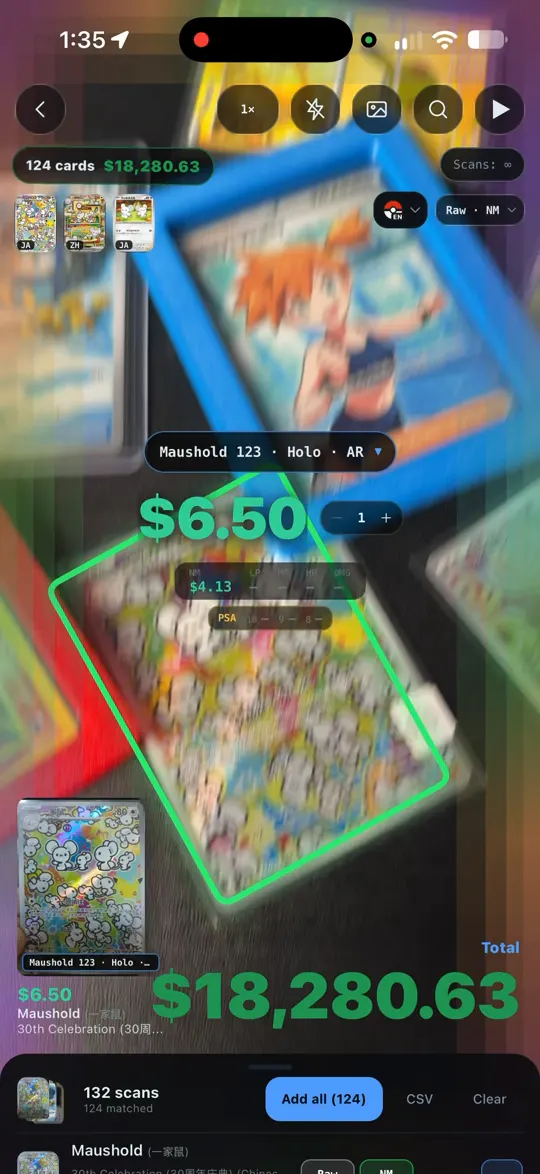
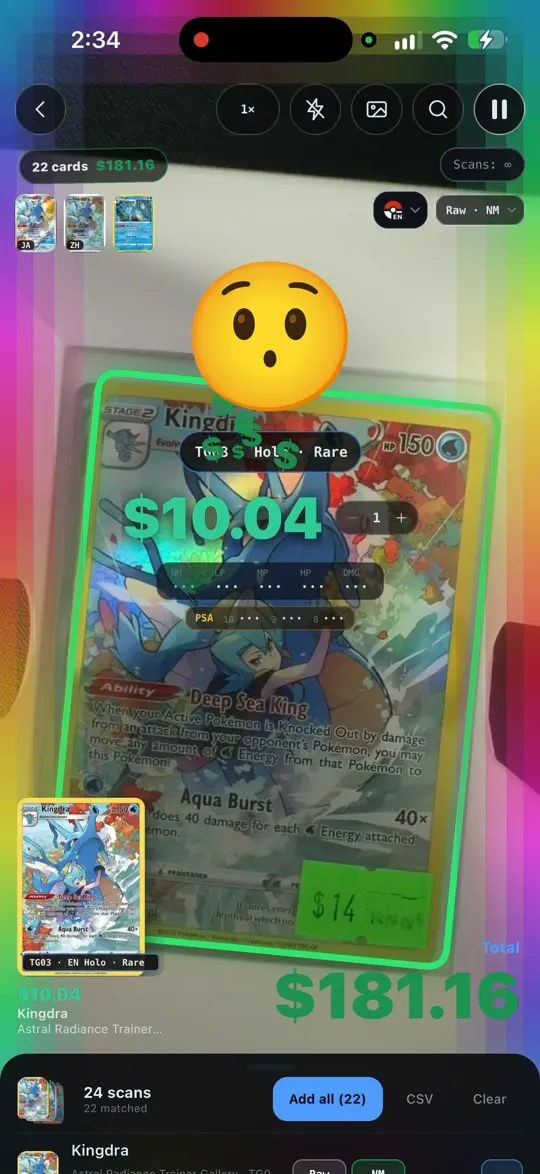
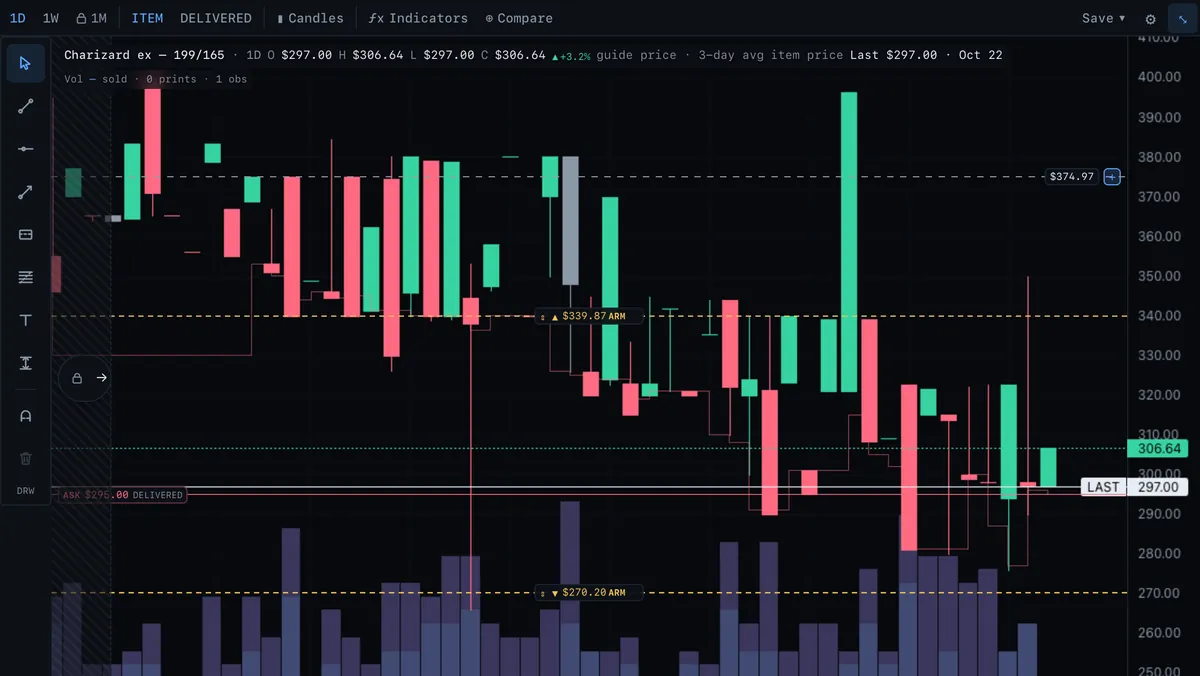
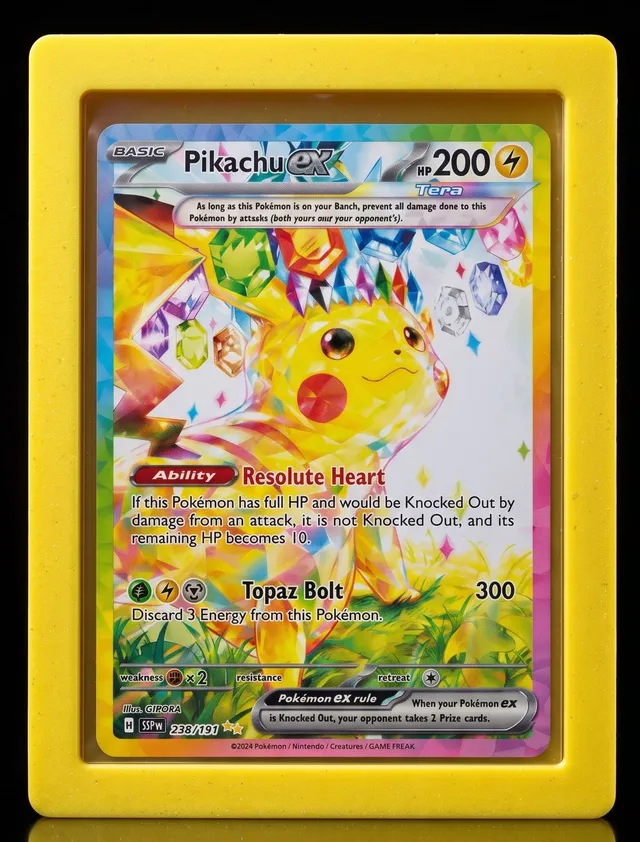
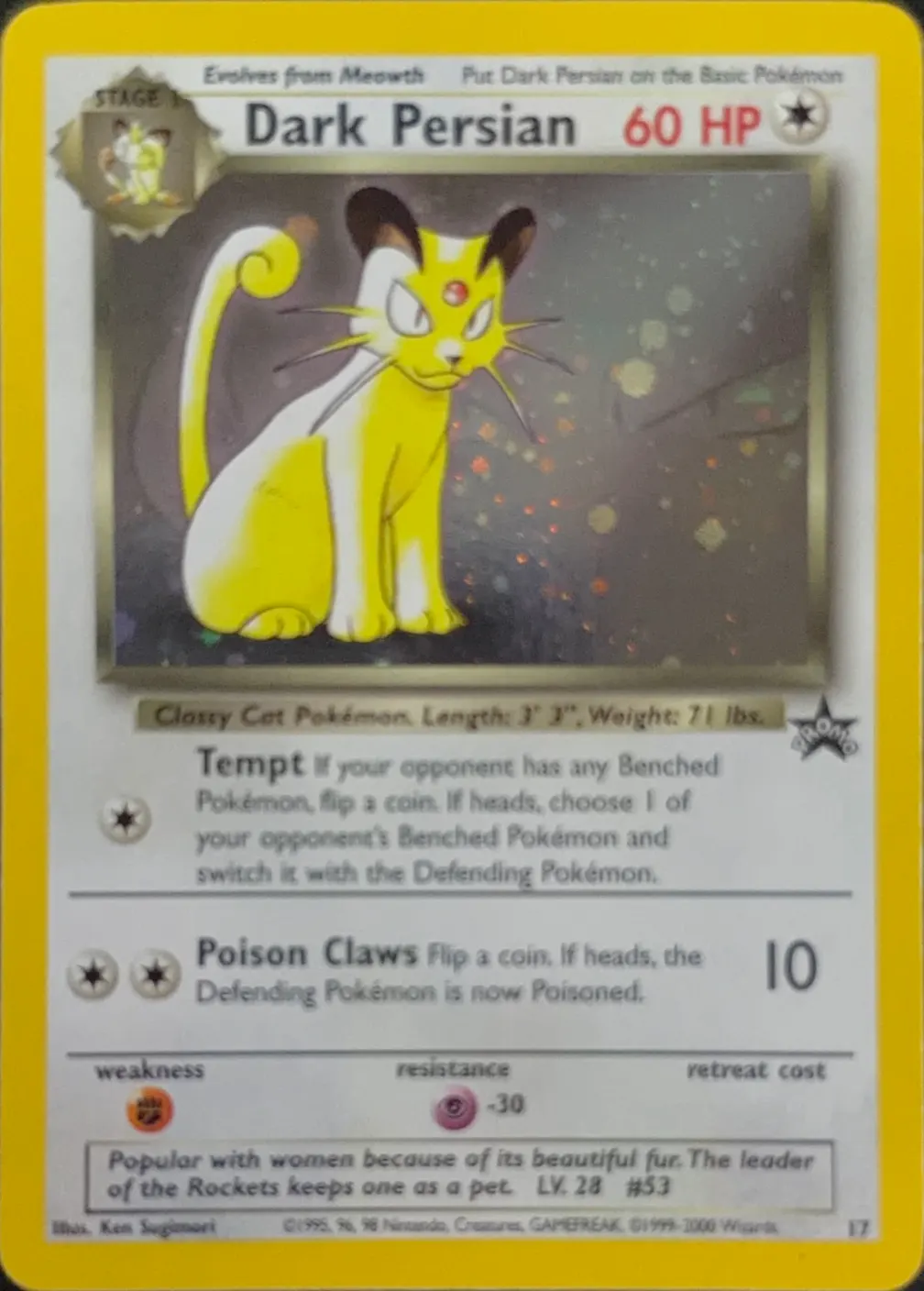
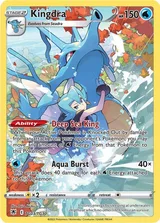
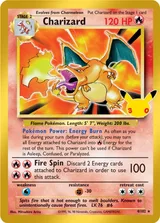
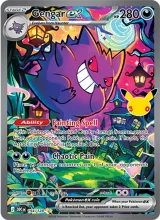
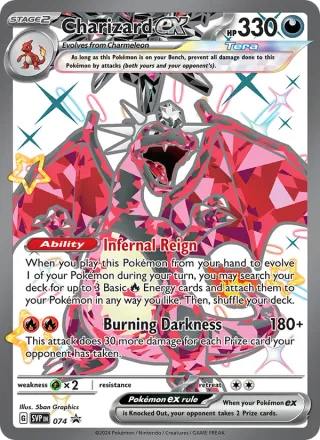
Every collection on Cardboard Alpha added together, valued every day from Oct 1, 2026 to Oct 23, 2026. Most of the rise is new collections and cards added: 2 collections and 156 cards on Oct 1, 13 and 1,555 by Oct 23.
Trade tool
See both sides. Never make a bad trade again.
✓Put what you give on one side and what you get on the other, every card priced live
✓A plain verdict: even, in your favour, or in theirs, and by how much
✓The cash that balances it, worked out for you before you shake on it
Live from the Grading Opportunity engine (Oct 26, 2026 build): popular cards with their own graded population, PSA 10 against raw. Hover a card for its numbers.
Pull rates
Know your odds before you rip.
✓Every set’s hit tiers with the odds of pulling one, measured where a study exists
✓The cards in each tier and what they sell for, most valuable first
✓What the whole hit slot is worth, so you can price a pack before you open it
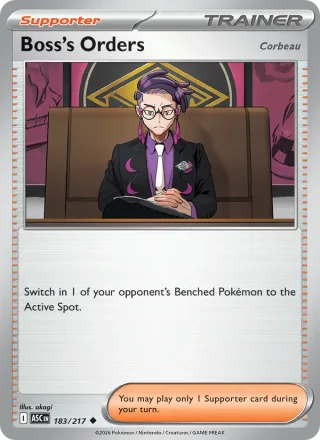
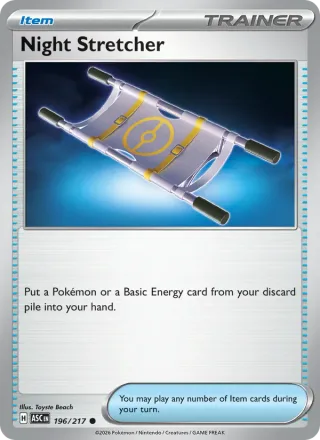
Standard, the 30 days to Oct 13, 2026: 22,383 decklists from 338 events. Share change is against 30 days earlier; deck cost is today’s prices. Behind the board: Boss's Orders (in 91% of decks), Night Stretcher (in 85% of decks), Lillie's Determination (in 82% of decks).
•Moderate gem · choose CGCCGC issued a 10 on 38.8% of its 1,196 slabs of this printing. Next best is PSA at 30.1% on 21,893 slabs. Easy at 60% or more, moderate from 35%, hard under 35%. Only graders with 30+ slabs on file are compared.
CGC gems 38.8% of 1,196 slabs; next best PSA at 30.1%.
10 rate by grader
CGC · choose38.8%Gem Mint 10 + Pristine 10464 of 1,196CGC: 464 of the 1,196 CGC slabs on file are a 10 (Gem Mint 10 + Pristine 10) — 38.8%, 95% interval 36.1%–41.6%.PSA30.1%PSA 106,580 of 21,893PSA: 6,580 of the 21,893 PSA slabs on file are a 10 (PSA 10) — 30.1%, 95% interval 29.5%–30.7%.ACE
Share of what was submitted and kept — not the odds your copy grades 10.
Grading ROI
▲GradePSA: +$993.28 expected, still +$972.33 at the 95% lower bound of the gem share — break-even needs 1% gems; observed 30% (95% floor 29%, n=21893).
Best on PSA: +$993.28 expected, still +$972.33 at the 95% lower bound of the gem share — break-even needs 1% gems; observed 30% (95% floor 29%, n=21893).
Odds of a 10 vs what it takes
PSA needs 1% tens to break even; the census shows 30%, with a 95% interval of 29% to 31% on 21893 slabs.
Fair valueUNDERVALUEDThe cheapest delivered ask sits more than 5% below the blended fair-value estimate (FAIR_VALUE_AT_FAIR_TOLERANCE_PCT).
Fair value $1,138.61 delivered, about $1,138.61 on the item basis; the cheapest delivered ask is 11.7% below it$1,138.61delivered-11.7%The cheapest delivered ask ($1,005.65) against the blended fair-value estimate.top 24%top 24% of 8,072 tracked on FV gap · Ranked against every tracked card as of Oct 30, 2026; the number above is live.
$1,005.65
Bottom line
—Hold48/100 on the weighted composite (46 plus 2 for competitive meta): at or above 65 is a buy, at or below 35 a sell, and everything between is a hold.
48/100 across 9 of 11 inputs. For: the cheapest ask is 11.7% under fair. Against: price trend reads 0/100.
Price trend0Price trend0/1007-day and 30-day returns read against the noise of this card’s own series. Above 50 the price moved further than its own noise explains; below 50 it moved the other way. Withheld on a window with no confirmed print, where the line is the relay’s published guide and the return would be a reading of its revision schedule.
The live analytics on Umbreon ex 161/131 (Prismatic Evolutions, Raw Near Mint): fair value, the bottom line, gem rate by grader and grading ROI, exactly as its card page shows them.
25.4%
ACE 10262 of 1,030
ACE: 262 of the 1,030 ACE slabs on file are a 10 (ACE 10) — 25.4%, 95% interval 22.9%–28.2%.
break-even 1.4%
Break-even1.4%The 10 rate this submission would need just to cover the raw price and the fee. It is the white line on the meter above: the solid segment has to clear it before grading is worth doing at all.
observed 30.1% [29.5%–30.7%] n=21893Observed 10 rate30.1%Measured over 21893 graded copies in the census, with a 95% interval of 29.5%–30.7% around it — the band on the meter IS that interval, and it is the width of the doubt, not of the opportunity. A small n makes it wide.
VendorVendorThe grading company, one row each. Rows are the graders we hold both a fee schedule and a population census for — a grader we cannot price is left out rather than estimated.
FeeFeeThe all-in submission cost per card at this grader: grading tier plus shipping both ways and insurance, as published. A † marks a fee we could not read from a published schedule and had to carry from a prior reading. Lower is better.
P(10)P(10)The share of this card’s submissions to this grader that came back a 10, from its own population census. It is what WAS submitted and kept, not the odds your particular copy grades — a card people only submit when it looks perfect reads high here for that reason alone.
10 price10 priceWhat a 10 from this grader actually sells for. The superscript says what kind of evidence that is — a sale, an unsold listing, or the provider’s own modelled guide.
ROI(10)ROI(10)Return if the card grades a 10 and sells at that price: (10 price − raw price − fee) over what you put in. The BEST case, before any probability is applied. Higher is better.
Risk-wtdRisk-wtdThe same return weighted by the odds of each grade, not just the 10 — the number to compare graders on, because a high P(10) at a high fee can lose to a lower one. A leading ≈ means the full grade distribution was unavailable and a coarser method stood in. Higher is better.
ACE
$24.39ACE Basic — the cheapest tier accepting single-card submissions, read 2026-10-06. £18.00 converted at GBP/USD 1.355 (2026-09-01) — a conversion, not a quoted USD price. Cheaper tiers you cannot use today: Core $16.26, Value $20.33.
25.4%95% interval 22.9%–28.2% on n=1030. A share of what was submitted and kept, not submission odds.
$2,766$2,765.98. What a 10 from this grader actually sells for. The superscript says what kind of evidence that is — a sale, an unsold listing, or the provider’s own modelled guide.
+127%+$1,344.45 on a $1,055.04 cost basis.
≈+30%Only 80% of the ACE distribution is priced, so this falls back to P(10)·ROI(10) + (1−P(10))·ROI(pooled sub-10 price).
BGS
$79.95BGS Express — the cheapest tier accepting single-card submissions, read 2026-09-01. Cheaper tiers you cannot use today: Base $14.95.
—The share of this card’s submissions to this grader that came back a 10, from its own population census. It is what WAS submitted and kept, not the odds your particular copy grades — a card people only submit when it looks perfect reads high here for that reason alone.
Pre-grade this card →Photograph your own copy front and back for centering, wear and the odds of each grade. An estimate, not a grade.
$1,005.65 raw (cheapest delivered ask) + $59.99 PSA Standard + $25.00 ship/ins = $1,090.64 · less 13.25% sale fee · 45d lockup
Share of what was submitted and kept — not the odds your copy grades 10.
Market price$1,005.65
What the market is actually asking right now — the cheapest delivered price, or the newest confirmed print when no ladder exists. The card’s verdict is where this line falls against the band.
$1,138.61Fair value$1,138.61The blend’s point estimate — the weighted centre of the four component reads listed below. It is the middle of a band, not a target: read the band’s width before the point.
$1,042.94The bottom of the stated fair-value band — the cheap end of the blend, not a floor and not a support level. A wider band is the model saying it is less sure, so the two ends are more informative together than the point between them.$1,234.28The top of the stated fair-value band — the rich end of the blend, not a ceiling and not a target. A wider band is the model saying it is less sure, so the two ends are more informative together than the point between them.
Sales VWAP$1,167.5762%Sales VWAP$1,167.57Time-decayed, unit-weighted mean delivered price of confirmed prints — the last 48h dominate.Weight 62% of the blend, after reweighting away the inputs with no evidence.Depth clearing$1,092.2838%Depth clearing$1,092.28VWAP of the cheapest tranche of the live delivered-ask ladder — the price at which real fixed-price supply actually clears.Weight 38% of the blend, after reweighting away the inputs with no evidence.Trend anchor$1,178.740%Trend anchor$1,178.74The fall is confirmed and this anchor (a trailing SMA) sits on the far side of what the card is printing — reweighted away, not blended against the move.Weight 0% of the blend, after reweighting away the inputs with no evidence.Auction clearingN/A—Auction clearingN/AUnavailable in the trailing 30d window — reweighted away, not defaulted.No evidence for this input, so it carries no weight — the blend is the other components, reweighted.
≈$1,138.61 item basis · ±8.4% band · 3 of 4 inputs · 22 obs / 30dBand is ±8.4% of the point estimate: 2 of 4 components available (excluded: trend anchor — a trailing average on a confirmed fall, auction clearing — 35% of weight reweighted away, 18% confidence penalty), on 22 observation(s) in the trailing 30d. Thin samples and missing components widen the band 2.54x over the raw component spread. No recent clearing price: too few prints in the last 120h to say what it is trading at now.
›11.7% under fair — buy at $1,098.31 delivered.
Carries 13% of the composite.
Value vs fair73Value vs fair73/100The cheapest delivered ask against the blended fair-value estimate, two points per percent. Above 50 the card is trading under what the evidence says it is worth. Withheld entirely when fair value declares itself UNKNOWN — a discount measured against an untrustworthy anchor is not a discount.Carries 17% of the composite.
Money flow80Money flow80/100Confirmed prints split into buy-side and sell-side against the prevailing ask, on a log scale — one decade of imbalance earns the full swing, because 100:1 is a thinner sample saying what 10:1 already said.Carries 11% of the composite.
Relative strength4Relative strength4/100This card’s 30-day return as a percentile of every tracked card that has one. 50 is "moved with the market". Declines to speak until the ranked universe is large enough to mean it.Carries 7% of the composite.
Book pressure30Book pressure30/100Supply leaving the market or refilling it. Prefers the 30-day inventory change; falls back to the venue's own listing count over the readings held, capped tighter because a shorter window is weaker evidence. Withheld on a count that never moves, or on a book so small that one listing's arrival pins the percent to a rail.Carries 11% of the composite.
Liquidity65Liquidity65/100Four equally-weighted readings of what counterparties did: the chance it trades today, how many of the last 30 days carried a trade, 30-day units sold against the units on the board, and how many different people are selling it. A reading nobody can measure is absent and the rest reweight.Carries 9% of the composite.
Manipulation risk55Manipulation risk55/100RISK-ORIENTED. What it costs to walk the visible book up 50%, against both real trailing volume and one buyer’s cheque book. High here is bad, and it enters the composite inverted.Carries 9% of the composite, inverted: 55 risk entered as 45.
Scarcity47Scarcity47/100How few of this card exist, as a percentile of every card we can read. Prefers PRINT SCARCITY’s estimate — graded population with the value confound divided out, turned into a print scale by the pull rate — and falls back to packs-per-copy alone where that cannot be read. Scarce is oriented as GOOD, on the theory that thinner supply supports a price. Weighted low on purpose: scarcity is fixed at print and the market has had years to price it in, so this is a structural prior rather than an edge.Carries 7% of the composite.
Grading upside50Grading upside50/100Best expected return across grading vendors, half a point per percent — the optionality on top of the raw thesis, never the thesis itself.Carries 6% of the composite.
9 of 11 inputs · 90% weight · -5% confidence▾
Not reading yet: seller concentration, reprint risk.
Price trend13%07-day and 30-day returns read against the noise of this card’s own series. Above 50 the price moved further than its own noise explains; below 50 it moved the other way. Withheld on a window with no confirmed print, where the line is the relay’s published guide and the return would be a reading of its revision schedule.Value vs fair17%73The cheapest delivered ask against the blended fair-value estimate, two points per percent. Above 50 the card is trading under what the evidence says it is worth. Withheld entirely when fair value declares itself UNKNOWN — a discount measured against an untrustworthy anchor is not a discount.Money flow11%80Confirmed prints split into buy-side and sell-side against the prevailing ask, on a log scale — one decade of imbalance earns the full swing, because 100:1 is a thinner sample saying what 10:1 already said.Relative strength7%4This card’s 30-day return as a percentile of every tracked card that has one. 50 is "moved with the market". Declines to speak until the ranked universe is large enough to mean it.Book pressure11%30Supply leaving the market or refilling it. Prefers the 30-day inventory change; falls back to the venue's own listing count over the readings held, capped tighter because a shorter window is weaker evidence. Withheld on a count that never moves, or on a book so small that one listing's arrival pins the percent to a rail.Liquidity9%65Four equally-weighted readings of what counterparties did: the chance it trades today, how many of the last 30 days carried a trade, 30-day units sold against the units on the board, and how many different people are selling it. A reading nobody can measure is absent and the rest reweight.Manipulation risk9%55RISK-ORIENTED. What it costs to walk the visible book up 50%, against both real trailing volume and one buyer’s cheque book. High here is bad, and it enters the composite inverted.Scarcity7%47How few of this card exist, as a percentile of every card we can read. Prefers PRINT SCARCITY’s estimate — graded population with the value confound divided out, turned into a print scale by the pull rate — and falls back to packs-per-copy alone where that cannot be read. Scarce is oriented as GOOD, on the theory that thinner supply supports a price. Weighted low on purpose: scarcity is fixed at print and the market has had years to price it in, so this is a structural prior rather than an edge.Grading upside6%50Best expected return across grading vendors, half a point per percent — the optionality on top of the raw thesis, never the thesis itself.Seller concentration5%no readingThe venue attributes no seller identity to these asks.Reprint risk5%no readingPrint status is unestablished — no shelf observation and no recorded reprint event.
Competitive meta+2A BONUS on top of the weighted composite, never a penalty: 20% of Standard decklists or more adds 8, 5% or more adds 5, and any measured play at all adds 2. A card nobody plays is not marked down for it. Measured on 0.0% of 22,383 Standard decklists in the last 30 days.
The bottom line is a weighted mean of the signals that reported, renormalised so their weights sum to 1. Nothing defaults to a neutral 50: an input with no evidence is reweighted away and its absence is charged as a confidence penalty. Risk rows (manipulation, concentration, reprint) enter inverted. Data quality carries no weight at all — it decides whether the verdict may be spoken, because knowing a lot about a card is not a reason to buy it. Competitive meta sits OUTSIDE the weighted mean as a capped bonus added after it: a card nobody plays is never marked down for that, and a card the meta is built on can be marked up for it.
$25,947$25,947.22. What a 10 from this grader actually sells for. The superscript says what kind of evidence that is — a sale, an unsold listing, or the provider’s own modelled guide.
+1927%+$21,398.61 on a $1,110.60 cost basis.
—Risk-weighted ROI withheld: no BGS population total, so P(10) has no honest denominator.
CGC
$20.00CGC Economy — the cheapest tier accepting single-card submissions, read 2026-10-06. Cheaper tiers you cannot use today: Bulk $17.00.
38.8%95% interval 36.1%–41.6% on n=1196. A share of what was submitted and kept, not submission odds.
$4,006$4,005.75. What a 10 from this grader actually sells for. The superscript says what kind of evidence that is — a sale, an unsold listing, or the provider’s own modelled guide.
+231%+$2,424.34 on a $1,050.65 cost basis.
≈+89%Only 57% of the CGC distribution is priced, so this falls back to P(10)·ROI(10) + (1−P(10))·ROI(pooled sub-10 price).
PSA
$59.99PSA Standard — the cheapest tier accepting single-card submissions, read 2026-10-06. Cheaper tiers you cannot use today: Value Bulk $24.99, Value $32.99.
30.1%95% interval 29.5%–30.7% on n=21893. A share of what was submitted and kept, not submission odds.
$5,200$5,200.00. What a 10 from this grader actually sells for. The superscript says what kind of evidence that is — a sale, an unsold listing, or the provider’s own modelled guide.
+314%+$3,420.36 on a $1,090.64 cost basis.
+91%Risk-weighted across all 14 PSA rungs; 100% of the distribution carried its own price, the remaining 0% valued at the pooled sub-10 price.
TAG
$59.95TAG Standard — the cheapest tier accepting single-card submissions, read 2026-10-06. Cheaper tiers you cannot use today: Basic $22.00.
—The share of this card’s submissions to this grader that came back a 10, from its own population census. It is what WAS submitted and kept, not the odds your particular copy grades — a card people only submit when it looks perfect reads high here for that reason alone.
$4,613$4,612.50. What a 10 from this grader actually sells for. The superscript says what kind of evidence that is — a sale, an unsold listing, or the provider’s own modelled guide.
+267%+$2,910.74 on a $1,090.60 cost basis.
—Risk-weighted ROI withheld: no TAG population total, so P(10) has no honest denominator.
2026-10-30O $557.01H $584.26L $557.01C $584.26
Daily candles, weekly/3-day where that is the finest data · dashed line: delivered ask floorOpen in terminal →