Cardboard Alpha's own grading model puts the Grade 10 premium over Grade 9 anywhere from 1.83x to 8.13x across five tracked cards, and only about one in five cards it evaluates clears a positive grading expected value once a modeled PSA fee and the raw price are subtracted.
A Grade 10 slab is not a fixed multiple over a Grade 9. On Cardboard Alpha's own grading model (built 2026-09-21), the median Grade 10 sale ran from about 1.83x the median Grade 9 sale on Umbreon VMAX up to 8.13x on Pikachu & Zekrom GX across five tracked cards. After subtracting a modeled PSA grading fee and the raw card's own price, only about 1 in 5 of the 2,963 cards the model evaluated cleared a positive expected value from grading at all.
That second number matters as much as the first. A big 10-over-9 gap on paper does not automatically mean grading pays for itself once the fee and the raw card's cost are taken out.
The 10-over-9 premium, five cards at a time
The gap between a Grade 9 and a Grade 10 of the same card varies widely by card. Across these five, the multiple runs from 1.83x to 8.13x, and the dollar gap runs from about $1,005 to $2,675. All five are priced from median admitted sales over a trailing six-month window, as of the 2026-09-21 build of Cardboard Alpha's Grading Opportunity model.
One labeling note before the table: the model's Grade 9 and Grade 10 tiers pool slabs from every grader it tracks (PSA, CGC, Beckett, TAG and others). These are Grade 9 and Grade 10 medians, not PSA-only prices.
Source: Cardboard Alpha Grading Opportunity model, build 2026-09-21, all graders pooled. Grade 9 and Grade 10 are each priced only with at least 3 admitted sales.
Grade 10 median price by card
Pikachu & Zekrom GX$3,050
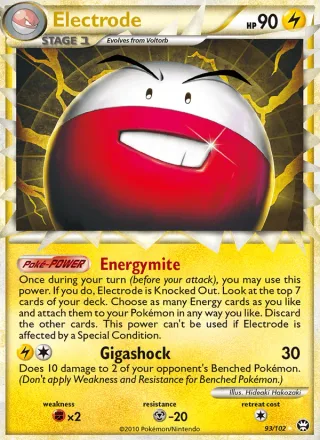
Electrode$1,837.5
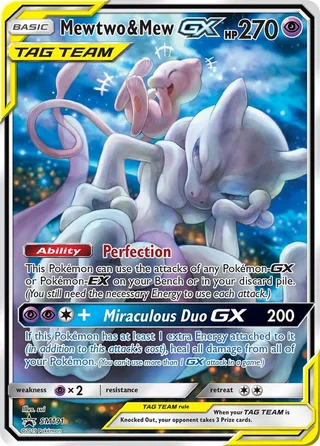
Mewtwo & Mew GX$2,936
Charizard ex (151)$1,400
Umbreon VMAX$4,200
Median admitted Grade 10 sale per card, all graders pooled, Cardboard Alpha Grading Opportunity model, build 2026-09-21.
Umbreon VMAX has the smallest multiple in this group, but it also has the highest starting price in both grades. A small multiple on an expensive card can still be a bigger dollar gap than a large multiple on a cheap one: Umbreon's $1,900.01 gap is wider than Electrode's $1,588.56 or Charizard ex's $1,004.76.
Grade 9 median $2,299.99 (91 sales) vs Grade 10 median $4,200.00 (289 sales), a 1.83x multiple, all graders pooled, as of the 2026-09-21 Grading Opportunity build.
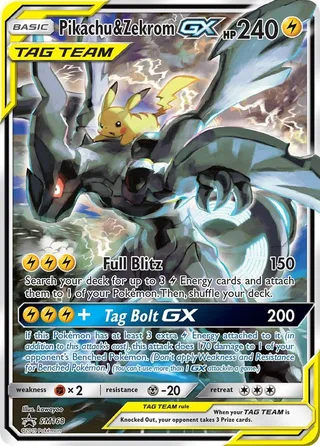
Pikachu & Zekrom GX sits at the other end. Its Grade 9 median is under $400, but its Grade 10 median is over $3,000, the widest multiple of the five.
Grade 9 median $375.00 (52 sales) vs Grade 10 median $3,050.00 (141 sales), an 8.13x multiple, all graders pooled, as of the 2026-09-21 Grading Opportunity build.
Charizard ex from the 151 set and Mewtwo & Mew GX sit in between, at 3.54x and 5.24x.
Grade 9 median $395.24 (202 sales) vs Grade 10 median $1,400.00 (266 sales), a 3.54x multiple, all graders pooled, as of the 2026-09-21 Grading Opportunity build.
Grade 9 median $560.00 (50 sales) vs Grade 10 median $2,936.00 (181 sales), a 5.24x multiple, all graders pooled, as of the 2026-09-21 Grading Opportunity build.
Electrode, the cheapest raw card in the group, still carries a 7.38x multiple between its two graded tiers.
Grade 9 median $248.94 (33 sales) vs Grade 10 median $1,837.50 (18 sales), a 7.38x multiple, all graders pooled, as of the 2026-09-21 Grading Opportunity build.
One number to keep separate from this multiple: a "gem multiple" (Grade 10 price divided by the raw card's price) answers a different question, how much a raw copy gains from grading at all, not how much a 9 gains by becoming a 10. The two are easy to conflate and this article is mostly about the second one. Both ratios are worked out for Japanese cards and their English twins in a separate comparison.
How PSA and CGC define a 9 and a 10
The price gap traces back to a physical standard, not an arbitrary label. PSA's Gem Mint 10 calls for four perfectly sharp corners, sharp focus, full original gloss, no staining of any kind, and centering within roughly 55/45 on the front and 75/25 on the back, with an allowance for a slight printing imperfection that does not impair the card's overall appeal (PSA Grading Standards, accessed September 1, 2026).
That bar is not identical across grading companies. CGC's current scale splits its top grade in two and adds a half-grade step above Mint 9:
Pristine 10: virtually flawless to the naked eye, with 50/50 centering and flawless color and registration, tighter than PSA's 55/45 allowance.
Gem Mint 10: a 10 overall where one grading criterion misses the Pristine bar. Corners look perfect to the naked eye and Mint+ under 10x magnification, and centering stays within about 55/45 on the front and 75/25 on the back, the same limits PSA states for its Gem Mint 10.
Mint+ 9.5: a Mint card with premium eye appeal, lifted by qualities such as exceptional centering or surface.
Mint 9: four sharp corners with only minor wear and slight edge flaws, full original gloss, and a small number of specks or one minor spot or surface defect allowed (CGC Cards Grading Scale, accessed September 27, 2026).
A CGC 10 and a PSA 10 are not automatically the same card in the same condition. That is one more reason to read this article's pooled Grade 10 medians as a market-wide figure rather than a PSA-only price, and to compare gem rates within one company's own Population Report before crossing between graders.
How this article's numbers are built
Every price and expected-value figure above comes from Cardboard Alpha's own Grading Opportunity model, rebuilt weekly from admitted sales in Cardboard Alpha's production sales ledger over a trailing six-month window. The 2026-09-21 build is the source for every dollar figure in this article.
The model will not price a tier on thin evidence. Grade 9 and Grade 10 each need at least 3 admitted sales, and the raw near-mint tier needs at least 2, before a card qualifies. A tier is also refused as too dispersed if its highest sale runs more than 5x its own median. Cards that fail either check are left out of the published set entirely rather than assigned an estimated price.
Of 32,782 candidate cards with at least one raw, Grade 9 or Grade 10 sale in the window, 2,963 qualified. The recorded exclusions: 18,613 had a raw price but too few Grade 9 or Grade 10 sales, 1,645 had enough graded sales but fewer than 2 raw sales, 221 were refused for dispersed pricing, and 179 for an implausible gem multiple (a Grade 10 price above 100x the raw price). The remaining 9,161 fell short on both raw and graded sales.
The build publishes its top 500 cards in full. Of those, 202 had enough of their own on-file graded population to weight the grades directly, and 298 fell back to a stated default split (35% Grade 10, 35% Grade 9, 15% Grade 8, a modeling assumption rather than fitted data).
All five cards in this article used their own on-file graded population, not the default fallback split.
Grading cost versus what it pays back
A Grade 10 selling for more than a Grade 9 does not by itself mean grading was worth it. The model's expected-value (EV) figure subtracts a PSA submission fee, chosen from the model's PSA fee table by the card's raw price, and the card's raw price from the probability-weighted graded payoff. Copies that grade below 8 count as zero, and shipping and insurance are not included. A positive EV means grading cleared its own cost on that basis, not just that a 10 sells higher than a 9.
Card
Raw price
On-file graded population
Expected value (net of modeled fee)
Umbreon VMAX
$2,150.00 (11 sales)
33,089
+$1,191.81
Mewtwo & Mew GX
$358.49 (5 sales)
21,404
+$1,152.12
Pikachu & Zekrom GX
$222.50 (8 sales)
15,602
+$954.95
Charizard ex (151)
$365.31 (55 sales)
111,466
+$185.08
Electrode
$46.71 (6 sales)
1,117
+$149.25
Source: Cardboard Alpha Grading Opportunity model, build 2026-09-21. EV is probability-weighted graded value minus raw price minus the modeled PSA fee, using each card's own on-file population split across grades. Graded prices pool all graders.
One caveat on the top row: Umbreon VMAX's raw price sits above the declared-value cap of the PSA fee tier the model applies, and the model flags its fee as over cap. A real submission at that value would cost more, so Umbreon's EV reads high by that difference.
All five of these specific cards clear a positive EV in this build. That is a selection effect of choosing cards to illustrate the premium spread, not evidence that most cards in the model do the same.
System-wide, only 19.8% of the 2,963 evaluated cards in the 2026-09-21 build cleared a positive EV. Each card is measured on its best available evidence: its own graded population where enough was on file, the stated default split otherwise. That share is not even across eras.
Cardboard Alpha Grading Opportunity model, build 2026-09-21, eraGroups summary. Modern covers Sword & Shield, Scarlet & Violet and Mega Evolution.
Modern cards make up the large majority of the evaluated universe, 2,294 of 2,963 cards, and only 8.5% of them clear a positive EV. The same build also shows a smaller typical Grade 10 premium over raw on modern cards: a median gem multiple of 12.8x, against 19.2x for vintage, 22.0x for classic and 14.9x for mid-era cards. The model does not isolate why. Whether a more common Grade 10 is part of the reason is not something it tests, and the set-by-set gem-rate comparison covers how often different sets actually grade a 10.
What this comparison does not tell you
A median admitted-sale price is a summary of past transactions, not a promise about any one collector's own copy. A specific card can grade below or above what its tier's history suggests, and each grading company applies its own standards copy by copy.
This model also refuses to price a card rather than guess at it. A card with too few admitted sales, or with pricing too dispersed to summarize with a median, does not appear in the published set at all, whatever its history suggests informally.
Nothing here is a recommendation to submit any specific raw card for grading. It is a report of what admitted Grade 9 and Grade 10 sales have actually done for a set of tracked cards, as of one dated model build, not a forecast of what any card will do next.
Frequently asked questions
Is the 10-over-9 premium the same for every card?
No. Across five tracked cards in Cardboard Alpha's 2026-09-21 Grading Opportunity build, the median Grade 10 sale ran from 1.83x the median Grade 9 sale on Umbreon VMAX to 8.13x on Pikachu & Zekrom GX. Those medians pool slabs from every grader, not PSA alone, and the gap depends on the specific card rather than a hobby-wide rate.
Does a big Grade 10 premium mean grading is worth it?
Not by itself. Cardboard Alpha's expected-value figure already subtracts a modeled PSA grading fee and the raw card's price from the probability-weighted payoff, and system-wide only 19.8% of the 2,963 cards evaluated in the 2026-09-21 build cleared a positive EV on that basis.
Is a CGC 10 the same standard as a PSA 10?
Not automatically. CGC's Gem Mint 10 states the same approximate 55/45 front and 75/25 back centering limits as PSA's Gem Mint 10, but CGC also awards a separate Pristine 10 that requires 50/50 centering. Check which company and which label produced a 10 before treating two slabs as equivalent.
Why do modern cards clear the grading math less often than vintage cards?
In the 2026-09-21 build, only 8.5% of modern cards (Sword & Shield, Scarlet & Violet and Mega Evolution) cleared a positive EV, against 55.1% for vintage WOTC cards and 78.4% for classic cards (EX, Diamond & Pearl, HeartGold & SoulSilver). The same build's median gem multiple, Grade 10 price over raw price, is also lower for modern cards (12.8x) than for vintage (19.2x) or classic (22.0x). The model does not isolate the cause.
Does a positive EV mean my own card will make money if I grade it?
No. The EV is built from median prices of past admitted sales for that card, it leaves out shipping and insurance, and a card is refused entirely when its sample is too thin or too dispersed to summarize. It describes historical outcomes for that population of graded copies, not a guarantee for any individual submission.
Jay Montalbo writes about grading and selling for Cardboard Alpha. His background is in information technology, with nearly six years as an IT systems administrator and later work as an IT support analyst, and he brings the same troubleshooting habit to cards: break the problem into steps, check each one, and trust the answer only when every step holds. His articles work through when a grading submission pays for itself, how condition and grading-company standards move a card's value, and what a sale actually nets after marketplace fees and shipping, using published population reports, fee schedules, and completed-sale data. Every source is cited inline, and each piece is fact-checked against those sources before it is published.
Jay Montalbo's articles describe grading and selling mechanics using published population, fee, and pricing data. They are informational and are not personalized investment advice.
Grading
Gem Mint 10 Odds by Set: Which Sets Grade the Hardest
Gem mint 10 rates are not one hobby-wide number: PSA's Population Report puts Neo Genesis at roughly 3.2 percent PSA 10 and 2021's Evolving Skies near 59.2 percent, an eighteen-fold spread inside the same grading company's own data. PSA publishes the counts behind each rate but no cause for the gap. Even within a single set, one chase card can grade far harder than the set's own average.