Shipping Pokemon Cards Safely: Materials and Insurance
A sleeve, a rigid holder, tape or a team bag to stop sliding, and a bubble mailer or secure envelope make up the packing TCGplayer and eBay describe; value then sets the postage and paperwork. On October 17, 2026, eBay's Standard Envelope started at $0.78 for cards selling up to $20, and TCGplayer required signature confirmation above $250.
TCGplayer and eBay describe the same packing for a single Pokemon card: a sleeve, a rigid holder, tape or a team bag so the card cannot slide out, and a bubble mailer or secure envelope. After that, the sale price sets the postage and the paperwork.
On October 17, 2026, eBay's Standard Envelope started at $0.78 for cards selling for up to $20. TCGplayer required tracking on orders over $49.99 and signature confirmation over $250.
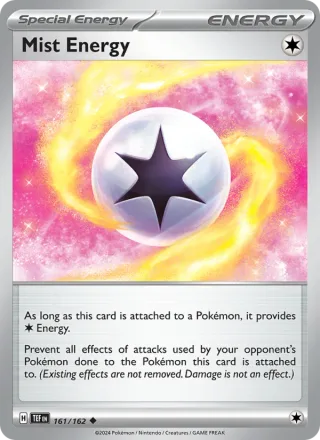
A Zone 1 Ground Advantage retail parcel up to 4 oz cost $8.40 on USPS's list, which is 4.3 times the $1.94 that Cardboard Alpha's evaluated price put on a raw Near Mint non-holo Mist Energy 161 that day.
Sleeve first. TCGplayer starts with a soft sleeve, loaded bottom left corner first so the corners do not catch. eBay calls for a penny sleeve on a raw card before it goes into a holder.
Add a rigid layer. TCGplayer calls a toploader highly recommended and accepts a card sandwiched tightly between rigid cardboard. eBay names a card saver, a toploader or a cardboard sandwich.
Sleeve opening down. TCGplayer advises loading the toploader with the sleeve's opening facing down, so a card that slips out of its sleeve does not also slip out of the holder.
Stop the slide. TCGplayer prefers a team bag around the holder. It says clear tape across a toploader's top also works, and taping all sides of a cardboard sandwich helps. eBay names blue painter's tape or masking tape on a toploader, which it says leaves no sticky residue.
Choose the mailer. TCGplayer says a bubble mailer or a secure envelope, and never an envelope with no protection. It asks for the least tape that works, because the buyer must unpack the card without damaging it.
Postage and paperwork by sale value
Neither marketplace's guidance varies those steps by price. What varies is the postage option and the tracking, insurance and signature rules, as they stood on October 17, 2026.
Order value
eBay
TCGplayer
$20 or less
Standard Envelope available (maximum $20 selling price)
No rule stated
Over $20 to $49.99
eBay Labels for automatic tracking
Tracking recommended
$50 to $250
eBay Labels for automatic tracking
Tracking required; insurance optional
Over $250
eBay Labels can add insurance and signature confirmation
Proof of signature confirmation needed in a payment dispute
Same as over $250
Sources: eBay's Standard Envelope help article, trading-card shipping page and payment dispute seller protections; TCGplayer's shipping guidelines.
For cards from $20 to $250, eBay's page warns that stamps on a plain white envelope send a card out untracked.
Graded cards: the Standard Envelope excludes them. eBay's trading-card page puts one graded card in a cardboard sandwich and two in a small box filled with tissue paper or bubble wrap.
Several raw cards: the Standard Envelope takes up to 24 raw cards, or no more than 2 cards in toploaders.
The eBay Standard Envelope
The Standard Envelope is eBay's low-cost label for small, light items up to 3 oz, and trading cards are one of its eight eligible categories. eBay says the option appears only in some categories, so a listing may not offer it.
Value limit: eligible items have a maximum $20 selling price, not counting tax.
Card limits: no more than 24 raw cards per envelope, no more than 2 cards in toploaders, and no graded cards.
Envelope rules: at least 3.5 by 5 inches and at most 6.125 by 11.5 inches, uniform thickness under 0.25 inch, flexible enough for sorting rollers, with no plastic, strings or closures and the address parallel to the longest side. An envelope that fails may be returned, or the buyer may receive it with postage due.
Price: on October 17, 2026, eBay's Seller Center listed $0.78 for 1 oz, $1.07 for 2 oz and $1.36 for 3 oz.
Tracking and protection: limited tracking, no acceptance scan, and protection up to $20 on a single-item order or $50 on combined orders.
Claims: a lost envelope can be claimed after 30 days and no later than 90 days from the label date, for no more than the item's sold price. eBay points claim-status questions to the Parcel Insurance Plan (PIP).
eBay's own pages disagree on the price. Its help article lists $0.82, $1.11 and $1.40, its trading-card page lists $0.60, $0.84 and $1.08, and none of the three pages is dated. The Seller Center figures equal USPS's metered letter prices in the table below, and this article uses them.
USPS letters, flats and parcels
USPS prices by shape and weight. On its price list effective October 4, 2026, a letter runs up to 11.5 by 6.125 by 0.25 inches and 3.5 oz. A large envelope, or flat, exceeds at least one of those letter limits and runs up to 15 by 12 by 0.75 inches.
Retail mail piece
Price
Letter, stamped, 1 / 2 / 3 oz
$0.82 / $1.11 / $1.40
Letter, metered, 1 / 2 / 3 oz
$0.78 / $1.07 / $1.36
Nonmachinable letter surcharge
add $0.49
Large envelope, 1 / 2 / 3 oz
$1.69 / $1.98 / $2.27
Ground Advantage, up to 4 oz, Zone 1
$8.40
Ground Advantage, 12 to 15.999 oz, Zone 1
$10.05
USPS Notice 123 price list effective October 4, 2026. Up to 4 oz, Ground Advantage retail rises to $10.20 in Zones 8 and 9.
Nonmachinable letters: USPS adds $0.49 to a letter with the nonmachinable characteristics defined in its Domestic Mail Manual, which the price list does not spell out. eBay's Seller Center explains the practical side: sorting machines use rollers, so an envelope has to bend, and it has to be uniformly thick.
Rigid or uneven flats: a large-envelope-size piece that is rigid, nonrectangular or not uniformly thick pays parcel prices.
Thicker envelopes: eBay's trading-card page tells sellers who need a thicker or more rigid envelope to check with the local postmaster, because of regional variances.
Postage as a share of a cheap sale
USPS prices postage by weight, shape and zone, not by what the card is worth, so postage takes a smaller share of the sale as the price rises. The table divides each figure above by Cardboard Alpha's evaluated raw Near Mint price on October 17, 2026. Whoever pays it, postage is part of the delivered price, which adds shipping to the item price.
Card
Evaluated price
Standard Envelope, 1 oz ($0.78)
Letter if nonmachinable ($1.31)
Ground Advantage retail ($8.40)
Mist Energy 161 (non-holo), Temporal Forces
$1.94
40.2%
67.5%
433.0%
Pikachu ex 063, Paldea Evolved
$4.64
16.8%
28.2%
181.0%
Flareon VMAX 18, Evolving Skies
$12.08
6.5%
10.8%
69.5%
Baxcalibur 210, Paldea Evolved
$30.29
over the $20 limit
4.3%
27.7%
Charizard ex 199, 151
$311.76
over the $20 limit
0.4%
2.7%
Cardboard Alpha evaluated prices for base raw Near Mint printings, policy evp-1.0.0, FINAL, October 17, 2026. They are not sale prices: the Mist Energy and Pikachu ex prices rest on 13 and 5 recorded sales that day, and the other three blend 2 to 4 same-day sales with a 30-day sales median and the best delivered ask. The letter column is the $0.82 stamped price plus the $0.49 surcharge. The sources give no weight for a packed card, so the 1 oz column is the lowest tier, not a finding about any card.
On the $1.94 card, the Standard Envelope's lowest tier takes 40.2% of the price, and a retail Ground Advantage parcel costs 4.3 times the card. On the $12.08 Flareon VMAX 18 those figures are 6.5% and 69.5%.
Raw Near Mint evaluated price $12.08 on October 17, 2026.
A retail Ground Advantage parcel costs less than the card only when the card sells for more than $8.40. USPS's commercial price for the same weight tier is $7.33 in Zone 1, and eBay says its Labels service gives eBay-negotiated rates at a lower cost, without listing them.
At $311.76, an order for Charizard ex 199 would sit above TCGplayer's $250 signature-confirmation line and below eBay's $750 order-total line. A retail Ground Advantage parcel is 2.7% of that price.
Raw Near Mint evaluated price $311.76 on October 17, 2026.
Insurance and claims
Each carrier and marketplace sets its own terms. The points below follow their wording and give no view on whether to insure a particular card.
USPS insurance fees: $2.80 for coverage up to $50, $3.50 up to $100, $4.50 up to $200 and $4.55 up to $300, on the October 4, 2026 list. Signature Confirmation on Ground Advantage costs $5.15 at retail or $4.15 electronically.
eBay above $250: eBay Labels can add insurance and signature confirmation, and tracking uploads on its own. Outside eBay Labels, eBay's page says to add both when a card is over $750 and to enter the tracking number.
eBay payment disputes: for a not-received dispute, eBay asks for carrier tracking that shows a delivered status, the delivery date and a recipient address matching the order. For order totals of $750 or more it also asks for proof that signature confirmation was purchased. Sellers have 5 calendar days to respond, and funds can be held for up to 90 days.
TCGplayer: insurance is optional above $49.99 and above $250. TCGplayer says a seller needs a carrier integrated with its Seller Portal (USPS, UPS or FedEx) to be protected against missing-order claims.
Those terms apply to a card in transit. Whether a homeowners or renters policy covers a collection kept at home is a separate question, covered in insuring a card collection.
How much does the eBay Standard Envelope cost for a Pokemon card?
On October 17, 2026, eBay's Seller Center listed $0.78 for 1 oz, $1.07 for 2 oz and $1.36 for 3 oz, and eligible items have a maximum $20 selling price. The price includes limited tracking and protection up to $20 on a single-item order or $50 on combined orders. eBay's help article lists higher figures, $0.82, $1.11 and $1.40, so its own pages disagree.
Can a toploaded card go in an eBay Standard Envelope?
Yes, with limits: eBay's help article allows no more than 2 cards in toploaders per envelope, or up to 24 raw cards, and no graded cards. The envelope must be uniformly thick and under 0.25 inch, flexible, and free of plastic, strings and closures, or it may be returned or reach the buyer with postage due. For a thicker or more rigid envelope, eBay's trading-card page says to check with the local postmaster.
When does TCGplayer require tracking or signature confirmation?
TCGplayer's shipping guidelines say orders over $20.00 should include tracking, orders over $49.99 must ship with tracking, and orders over $250.00 must ship with signature confirmation. Insurance is optional at the upper two levels. The guidelines name USPS, UPS and FedEx as the carriers integrated with its Seller Portal.
What tracking does eBay look for in a not-received payment dispute?
eBay asks for carrier tracking that shows a delivered status, the delivery date and a recipient address matching the order. For orders with a total cost of $750 or more, it also asks for proof that signature confirmation was purchased. Sellers have 5 calendar days to accept or challenge a dispute.
Does USPS charge extra for a rigid envelope?
USPS adds a $0.49 surcharge to a letter with nonmachinable characteristics and charges parcel prices for large-envelope-size pieces that are rigid, nonrectangular or not uniformly thick. On USPS's price list effective October 4, 2026, a stamped 1 oz letter cost $0.82, so a nonmachinable one cost $1.31, while a Zone 1 Ground Advantage retail parcel up to 4 oz cost $8.40.
How much of a cheap card's price goes to postage?
On October 17, 2026, Cardboard Alpha's evaluated price for a raw Near Mint non-holo Mist Energy 161 was $1.94, so eBay's $0.78 Standard Envelope tier equaled 40.2% of it and an $8.40 Ground Advantage retail parcel equaled 433.0%. On a $12.08 Flareon VMAX 18 the same two figures were 6.5% and 69.5%. Postage follows weight, shape and zone rather than the card's value, so its share falls as the price rises.
How should I ship my TCGplayer orders? (Shipping Guidelines for Sending Cards to Customers), TCGplayer Official / primary source · accessed October 23, 2026
Jay Montalbo writes about grading and selling for Cardboard Alpha. His background is in information technology, with nearly six years as an IT systems administrator and later work as an IT support analyst, and he brings the same troubleshooting habit to cards: break the problem into steps, check each one, and trust the answer only when every step holds. His articles work through when a grading submission pays for itself, how condition and grading-company standards move a card's value, and what a sale actually nets after marketplace fees and shipping, using published population reports, fee schedules, and completed-sale data. Every source is cited inline, and each piece is fact-checked against those sources before it is published.
Jay Montalbo's articles describe grading and selling mechanics using published population, fee, and pricing data. They are informational and are not personalized investment advice.