Whitney's Clefable — 014Raw · Japanese · Normal · Near MintEvery price, print, listing and score on this page belongs to this one printing in this one condition or grade — switch either dropdown and you are looking at a different one.
The condition or grade being priced. Each one is a separate instrument that trades at its own price, so choosing one replaces every figure on the page. “All conditions” and “All grades” are a union of the siblings — their tape, listings and volume are combined, with one sibling named as the reference for price and analytics.
∅Illiquid / UnknownIlliquid / UnknownThe classifier refused to call one: too little liquidity or too small a sample to test any rule. The absence of a read, never a tenth regime.As of 10:33ZAs of 10:33ZThe market price, its 1D/7D/30D returns, the order book, the For Sale counts and today’s price bar as they stood when this page was built. The page itself is served from a shared cache, so this stamp — not the moment you loaded it — is how old these numbers are. Your browser re-reads them a moment after the page arrives and this line follows.
Mkt Price
$34.08item—
Last $39.99 · $44.98 delivered · 32d
Mkt Price$34.08 itemThe venue’s published daily market guide, which the venue itself declares MODELLED. Nothing is confirmed to have traded at it, no copy is listed at it, and it is not our estimate — it is theirs. It is quoted on the ITEM basis — the basis every wall tile is quoted on — and it is what the chart plots on a day with no print of its own. Last confirmed fixed-price sale: $39.99 at 2026-10-09T23:07:10.080Z. Delivered $44.98 with shipping. One trade, not a statistic — the figure above it is the day's median.
Fair ValueN/A
Fair ValueN/ANo fair value is published for this instrument: no confirmed print or completed auction in 30 days — an estimate built from live asks alone would be a restatement of the book. The components below show what evidence exists; the estimate they would blend to is withheld rather than quoted. The 6 units sold in the last 30 days on this page did not state their condition. They count toward volume here but are priced on the "condition not stated" view, because a sale of unknown condition does not prove a Near Mint price. A weighted blend of independent estimates, quoted DELIVERED — item plus required shipping — where Mkt Price beside it may be item basis. Read the band, not the point: its width is the model's own confidence.
Liquidity
0/100
Thin liquidity
Liquidity0 /100How easily a position clears, scored 0–100. Four readings, equally weighted, each independently nullable: trade rate (the chance it trades today, from 30d units sold), trade breadth (how many of the last 30 days carried a trade), queue clearance (30d units sold against the units on the board) and seller dispersion (how many different people are selling it). A reading nobody can measure is absent and the rest reweight — never filled in with a zero.
30D Vol
8units▲+33.3%
units · vs prior 30d
30D Vol8 units8 units over the last 30 days, on eBay and TCGplayer. Newest reading Nov 4, 2026. Against 6 in the 30 days before.
For Sale
3units
1 sellers
For Sale3 unitsEvery active fixed-price ask with a known delivered price. Auctions are a separate market and are never counted here.
Graded Pop
418
across 2 graders
Graded Pop418Every slab reported by every grader we hold a census for, pooled. A share of what was submitted and kept — not the odds a copy grades 10.
💎 Graded premiumGraded ladder (× raw NM)PSA 10 · best · 12 sales$380 11xTAG 10 · 1 sale$135 4.0xBasisRaw NM · Nov 9$34.08Highest graded · PSA 10$380PSA 10 net · after PSA’s $39.99 fee$306
How this summary is madeThe first sentence is written by a language model from this card’s own data. The second is computed from the live numbers on this page every time it loads, so it moves with the market.
One candle per UTC day — the finest grain this market recordsOne candle per ISO week (Mon–Sun), rolled up from the daily barsOne candle per calendar month, rolled up from the daily barsitem — the sale price alone, excluding shipping. This is the basis TCGplayer’s own market guide is published on, and the basis every wall tile, screener row and watchlist quote uses, so it is what the headline compares against.delivered — item + required shipping, the basis every alarm, floor and fair value uses. A print whose shipping the venue never stated has no delivered price and is excluded from the bar rather than counted at its item price; a day with no priced print falls back to the guide, which is an item price and says so.
How each period is drawn. Candles and bars show the full observed open/high/low/close; line and area show the close alone. The DATA does not change with the mark.
Price scale (linear, log or percent), auto-scaling, and the note on exactly how these bars were built.
Expand the chart to the whole viewport. Same bars and same drawings — only the room they get changes.
Cursor — chart crosshair, pan and zoomTrend line — two pointsHorizontal line — one click, priced at the axisRay — two points, extended forwardZone — two cornersFibonacci retracement — anchor the move, start to endNote — click, then typeMeasure — drag for change, percent and barsMagnet — snap each new anchor to the nearest bar's open, high, low or close, so a line lands on an observation rather than between two of them.Nothing to clear — there are no drawings on this card.DRW
No fair value is published for this card — no confirmed print or completed auction in 30 days — an estimate built from live asks alone would be a restatement of the book.
Market safety
▲High riskOne buyer can set this price on at least one dimension: a spike here would outlive the 30-day window every number we publish is measured over, or the whole buyable book is inside a single ordinary order (under 5 units).
$305.97 buys the entire visible book — 3 units, fewer than one ordinary order (30d traded unknown, 1 ask).
Book
Supply
•Ample supply3 listed units against a 0.3/day pace is 11.3 days of stock. Under 7d reads tight, 30d or more reads heavy.
3 units listed across 1 sellers — 11.3d of stock at the 30-day pace of 0.3/day.
PopulationAll graders pooled418Every slab reported by every grader we hold a census for, as each of them states its own total. A share of what was submitted and kept — never the odds a copy grades 10.CGC79Slabs CGC itself reports for this card. Switching tabs changes the whole chart below to that grader's own grade curve.PSA339Slabs PSA itself reports for this card. Switching tabs changes the whole chart below to that grader's own grade curve.
2051010 — 205 slabs, 49.0% of the 418 charted hereCGC 24 (Gem Mint 10 · Perfect 10 · Pristine 10) · PSA 18129.59.5 — 2 slabs, 0.5% of the 418 charted hereCGC 212799 — 127 slabs, 30.4% of the 418 charted hereCGC 22 · PSA 105168.58.5 — 16 slabs, 3.8% of the 418 charted hereCGC 164988 — 49 slabs, 11.7% of the 418 charted hereCGC 7 · PSA 4227.57.5 — 2 slabs, 0.5% of the 418 charted hereCGC 2577 — 5 slabs, 1.2% of the 418 charted hereCGC 1 · PSA 426.56.5 — 2 slabs, 0.5% of the 418 charted hereCGC 2766 — 7 slabs, 1.7% of the 418 charted hereCGC 3 · PSA 4155 — 1 slabs, 0.2% of the 418 charted herePSA 1244 — 2 slabs, 0.5% of the 418 charted herePSA 2
Listed · 1 sellers · $305.973 unitsActive fixed-price asks with a known delivered price. Auctions are a separate market and never enter this count.Sold · 30d · 0.3/day8 unitsUnits over the last 30 days, on eBay and TCGplayer, against 6 in the 30 days before. Newest reading 2026-11-04.Graded · CGC 79 · PSA 339418 slabsEvery slab reported by every grader we hold a census for, pooled. A share of what was submitted and kept — not the odds your copy grades 10.
Absorption
—Building historyToo few readings of the book to tell a drawdown from noise. The count is on the card — see the note below.
6 readings of this book so far, one per 3 days, over 24d. The direction reads once there are enough of them to tell a drawdown from noise.
Method▾
Each reading takes the venue's own listing count for this card in this condition — the whole book — at that instant. The direction is classified by the platform's absorption reading over that series: a book drawn down with demand behind it reads as accumulation, one that refills after a drawdown reads as distribution. Copies and sellers come from the cheapest asks we sample, not from the book, and are labelled as such. Sold units are confirmed prints from the live tape over the same span, and are shown only when the tape reaches back past the first reading.
The direction is classified over the platform-standard 30-day trailing window. That window is a scope, not a history: it contains exactly the readings counted on this card and no others — and only readings that counted the venue’s own book, never a sampled one trended against a counted one.
Why It's Moving
What changedWhat changedThe observable that moved, stated before any reason for it — the fact the rest of this panel has to account for.
Modelled guide price stands at $34.08; there is no earlier reading to measure a move against. 1 active TCGplayer listing on file.
Primary explanationPrimary explanationThe reading the evidence best supports. It is an explanation, never a forecast, and it is only as good as the Evidence row two lines down.
Primary read: Liquidity scored 0/100 (composite weight 38%). — the largest single contributor to the current ILLIQUID_UNKNOWN regime read.
AlternativeAlternativeA competing explanation the SAME evidence would also support. It is printed even when the primary looks strong: an explanation with no stated alternative is a story, not an analysis.
Alternative explanation: Relative strength scored 87/100 (composite weight 38%).. With 1 distinct sellers/observations in the trailing window, either read is defensible — this is not a high-conviction single-cause move.
Provenance▾
EvidenceEvidenceWhat kind of fact this row is. A completed sale, a live ask and a calculated guide price are three different weights of evidence about the same number, and this column is the difference between them.
ObservedObservedThe day the fact was read — not the day the underlying event happened, and not today. An old date is an old reading.
AgeAgeHow long ago this row was read, as of the moment the page was computed.
ConfidenceConfidenceHow much weight this row carries where it feeds a model, from the resolver that matched it. Lower means a looser match or a thinner source, and a low-confidence row is reweighted rather than dropped.
ModelledModelledYes = a CALCULATED value (a guide price, an estimate); No = something actually observed (a sale, a listing, a census count). A modelled row is evidence about a model, not about the market.
Grading ROIGem rate · PSA · 181 10s of 339 graded53%Break-even gem rate35%Raw cost · cheapest NM ask$102Grading fee · PSA$39.99Expected value · net, risk-weighted$45.37ROI if a 10+97%ROI · risk-weighted+27%
👍 Grading pays (+27%) on a smaller premium.
PSA
CGC
TAG
💎11x·$380·👍G% 53%ROI +27%
💎 Graded premiumGraded ladder (× raw NM)PSA 10 · best · 12 sales$380 11xTAG 10 · 1 sale$135 4.0xBasisRaw NM · Nov 9$34.08Highest graded · PSA 10$380PSA 10 net · after PSA’s $39.99 fee$306Grading ROI
Sweeping 10% of the visible book costs $305.97The next unbought ask after that sweep sits at $101.99 ask.Visible asks only, at delivered prices. An unshipped listing has no delivered price and is not in this ladder.
50%·$305.97·$101.99 askSweeping 50% of the visible book costs $305.97The next unbought ask after that sweep sits at $101.99 ask.Visible asks only, at delivered prices. An unshipped listing has no delivered price and is not in this ladder.
80%·$305.97·$101.99 askSweeping 80% of the visible book costs $305.97The next unbought ask after that sweep sits at $101.99 ask.Visible asks only, at delivered prices. An unshipped listing has no delivered price and is not in this ladder.
Book $305.97Total notional on the visible ask ladder, and the largest single seller's share of it. A book that is mostly one seller's inventory is one decision away from moving.
Mechanics▾
Whole book$305.97
nothing traded — priced at the whole board
Book breadth1 level
3 units on the board
VenuesTCGplayer
The absorption ladder walks the visible delivered-price ask book cheapest-first: what each slice of the book costs, the ask it leaves marginal, and how far that sits from the last price the card actually traded at. Manipulation risk is the worse of two reads — how many days of this card’s own turnover it would take to absorb the cost of control, and whether the whole buyable book fits inside a single ordinary order.
Flow
—SteadyThis week's daily sold units overlap the middle half of the rest of the window, so no change in pace is separable from the noise. Trading at its own normal rate.
2 sold in 7d, 1.1× the 30d pace — 30d prints clear at $40.00 median, -60.8% vs the $101.99 floor.
This week 2 · last week 2 · 30d/wk 2
Recent prints
$59.99-41.2%7d ago$59.99 delivered, 1 unit, 2026-11-04T00:00:00.000ZMeasured against today's cheapest delivered ask — a print above it is information, not bad news.$30.00-70.6%9d ago$30.00 delivered, 1 unit, 2026-11-02T00:00:00.000ZMeasured against today's cheapest delivered ask — a print above it is information, not bad news.$49.99-51.0%17d ago$49.99 delivered, 1 unit, 2026-10-25T00:00:00.000ZMeasured against today's cheapest delivered ask — a print above it is information, not bad news.$52.00
Method▾
Daily units are the venue's own sold-quantity history, expanded off each bucket's real span, plus confirmed prints from the other side of the market. Prints come from the live sales tape at delivered prices. The floor is the cheapest delivered ask (item + required shipping) across venues — the same one FAIR VALUE prices against.
Bottom line
—No callUnder half the model had evidence, so the score is a statement about the inputs that reported rather than about the card. No call until more of them do.
34/100 across 4 of 11 inputs. For: it sits in the top 13% of ranked cards on 30-day return. Against: liquidity reads 0/100. That is under half the model, so no call is made on it.
Liquidity0Liquidity0/100Four equally-weighted readings of what counterparties did: the chance it trades today, how many of the last 30 days carried a trade, 30-day units sold against the units on the board, and how many different people are selling it. A reading nobody can measure is absent and the rest reweight.Carries 9% of the composite.Manipulation risk85Manipulation risk85/100RISK-ORIENTED. What it costs to walk the visible book up 50%, against both real trailing volume and one buyer’s cheque book. High here is bad, and it enters the composite inverted.Carries 9% of the composite, inverted: 85 risk entered as 15.Relative strength87Relative strength87/100This card’s 30-day return as a percentile of every tracked card that has one. 50 is "moved with the market". Declines to speak until the ranked universe is large enough to mean it.Carries 7% of the composite.Grading upside50Grading upside50/100Best expected return across grading vendors, half a point per percent — the optionality on top of the raw thesis, never the thesis itself.Carries 6% of the composite.
4 of 11 inputs · 31% weight · -35% confidence▾
Not reading yet: value vs fair, price trend, money flow, book pressure, seller concentration, reprint risk, scarcity.
Liquidity9%0Four equally-weighted readings of what counterparties did: the chance it trades today, how many of the last 30 days carried a trade, 30-day units sold against the units on the board, and how many different people are selling it. A reading nobody can measure is absent and the rest reweight.Manipulation risk9%85RISK-ORIENTED. What it costs to walk the visible book up 50%, against both real trailing volume and one buyer’s cheque book. High here is bad, and it enters the composite inverted.Relative strength7%87This card’s 30-day return as a percentile of every tracked card that has one. 50 is "moved with the market". Declines to speak until the ranked universe is large enough to mean it.Grading upside6%50Best expected return across grading vendors, half a point per percent — the optionality on top of the raw thesis, never the thesis itself.
Gem rate
•Moderate gem · choose PSAPSA issued a 10 on 53.4% of its 339 slabs of this printing. Next best is CGC at 30.4% on 79 slabs. Easy at 60% or more, moderate from 35%, hard under 35%. Only graders with 30+ slabs on file are compared.
PSA gems 53.4% of 339 slabs; next best CGC at 30.4%.
10 rate by grader
PSA · choose53.4%PSA 10181 of 339PSA: 181 of the 339 PSA slabs on file are a 10 (PSA 10) — 53.4%, 95% interval 48.1%–58.6%.CGC30.4%Gem Mint 10 + Perfect 10 + Pristine 1024 of 79CGC: 24 of the 79 CGC slabs on file are a 10 (Gem Mint 10 + Perfect 10 + Pristine 10) — 30.4%, 95% interval 21.3%–41.2%.
Share of what was submitted and kept — not the odds your copy grades 10.
Slab premium
•Modest slab premiumThe dearest priced rung is PSA 10 at $380.00, 3.7× the $101.99 raw reference (cheapest delivered ask).
A PSA 10 is worth $380.00 — 3.7× the $101.99 raw cheapest delivered ask.
Dearest slab per grading company
PSA 10$380.003.7×PSA 10 — $380.00, 3.7× raw$499.99 · EBAY · 2026-11-02 · $380.00 · EBAY · 2026-10-27 · $380.00 · EBAY · 2026-10-18 +9 more print(s)TAG 10$135.001.3×TAG 10 — $135.00, 1.3× rawCGC 9.5$105.00guide Nov 5The provider’s MODELLED value for this grade — not a sale and not even an offer. Often extrapolated from the grades that did sell. As of Nov 5, 2026.1.0×CGC 9.5 — $105.00, 1.0× rawRaw$101.99askA live listing. Nobody has paid this.1.0×Raw — $101.99, 1.0× rawThe cheapest copy actually listed for sale, delivered — item plus required shipping. An offer, not a price anybody has paid. Every multiple on this ladder is taken against it.
A PSA 10 fetches 181% more than a TAG 10.
One rung down, a PSA 9 is $99.99 — 1.0× raw.
Grading ROI
▲GradePSA: +$45.37 expected, still +$31.98 at the 95% lower bound of the gem share — break-even needs 35% gems; observed 53% (95% floor 48%, n=339).
Best on PSA: +$45.37 expected, still +$31.98 at the 95% lower bound of the gem share — break-even needs 35% gems; observed 53% (95% floor 48%, n=339).
Odds of a 10 vs what it takes
PSA needs 35% tens to break even; the census shows 53%, with a 95% interval of 48% to 59% on 339 slabs.
break-even 35.4%Break-even35.4%The 10 rate this submission would need just to cover the raw price and the fee. It is the white line on the meter above: the solid segment has to clear it before grading is worth doing at all.observed 53.4% [48.1%–58.6%] n=339Observed 10 rate53.4%Measured over 339 graded copies in the census, with a 95% interval of 48.1%–58.6% around it — the band on the meter IS that interval, and it is the width of the doubt, not of the opportunity. A small n makes it wide.
VendorVendorThe grading company, one row each. Rows are the graders we hold both a fee schedule and a population census for — a grader we cannot price is left out rather than estimated.
FeeFeeThe all-in submission cost per card at this grader: grading tier plus shipping both ways and insurance, as published. A † marks a fee we could not read from a published schedule and had to carry from a prior reading. Lower is better.
P(10)P(10)The share of this card’s submissions to this grader that came back a 10, from its own population census. It is what WAS submitted and kept, not the odds your particular copy grades — a card people only submit when it looks perfect reads high here for that reason alone.
10 price10 priceWhat a 10 from this grader actually sells for. The superscript says what kind of evidence that is — a sale, an unsold listing, or the provider’s own modelled guide.
ROI(10)ROI(10)Return if the card grades a 10 and sells at that price: (10 price − raw price − fee) over what you put in. The BEST case, before any probability is applied. Higher is better.
Pre-grade this card →Photograph your own copy front and back for centering, wear and the odds of each grade. An estimate, not a grade.
$101.99 raw (cheapest delivered ask) + $39.99 PSA Value + $25.00 ship/ins = $166.98 · less 13.25% sale fee · 45d lockup
Share of what was submitted and kept — not the odds your copy grades 10.
EvidenceEvidenceThe specific observations the explanation rests on. If this row is thin, treat the explanation as thin — it is the only thing holding it up.
Evidence: item-basis daily bars, TCGplayer active listings, absorption read ("Over 30d: inventory +0.0%, cheap depth no data, sales velocity no data -> NEUTRAL.").
ConfidenceConfidenceHow much weight to put on the primary explanation, given how much of the evidence actually resolved. It qualifies the row above; it never adds to it.
Confidence: 90% (floor-confidence 19/100), based on 166 days of observations.
What would disprove itWhat would disprove itThe observation that would break the primary explanation. It is what makes the reading falsifiable rather than unfalsifiable — and it is the thing to watch for next.
This read would be wrong if active listings rebound above 1 while sold median keeps falling.
CatalogCard identity: set, number, rarity, finish, release date. It dates from the printing itself, so an old reading here is expected and is not staleness.
Aug 19, 2001
25.2y
98%
No
Live askA copy offered for sale right now. An ask is what a seller wants, not what anyone paid — it bounds the price from above until it clears.
Nov 7, 2026
3d
90%
No
Guide priceA calculated market guide — a model of where the product is trading. Never a confirmed sale, and always marked Modelled.
Nov 9, 2026
2d
90%
Yes
Price statisticAn observed figure computed over several rows rather than one print — a delivered floor, a published median over a window.
Nov 7, 2026
3d
90%
No
Confirmed saleA completed transaction at a known price — the strongest evidence on this page. Prices are delivered (item + required shipping).
Oct 9, 2026
32d
85%
No
Inventory countHow many copies and listings stand on the book. What depth, supply and absorption are measured against.
Nov 7, 2026
3d
70%
No
Population censusA grader's published count of the copies it has slabbed at each grade. A record of what was submitted and kept, never the odds a copy grades.
Nov 5, 2026
6d
60%
No
Raw · Japanese · Normal · Near MintWhat every row above was gathered for — one printing, in this one finish and condition or grade. Change either switcher in the header and you are reading a different one; the page's own URL is the address of exactly this one.pq-quant-2026.10.0The version of the scoring and analytics formulas that produced everything on this page. Two figures computed under different versions are not comparable, which is why the version is stated rather than assumed.
Highest Volume
The 12 most-traded cards by dollar volume over the last 30 days
#
Card
SetSetThe set this printing belongs to. Sets differ in print run and age, which is most of why two cards at the same price behave differently.
Trend 30DTrend 30DThe last 30 days of price, drawn from a zero-independent scale. The shape is the reading — the level is the Price column beside it.
30D30DPrice change over the last 30 calendar days, signed. A dash when the series has no price close enough to 30 days ago to measure from.
PricePriceThe card’s current market price as the wall quotes it (an item price, before shipping).
30d vol30d volume30d volumeDollars traded over the last 30 days — units sold each day times that day’s price, summed. The same figure the wall sorts by, and the order this list is in.
FV GapFV GapPrice against fair value, signed. NEGATIVE is below the model — the card trades under its fair value — which is the opposite direction from the Pop 30D column’s colouring.
LiqLiqLiquidity, 0–100 — how easily a position clears, never whether it is cheap. Four readings, equally weighted, each independently nullable: trade rate (the chance it trades today, from 30d units sold), trade breadth (how many of the last 30 days carried a trade), queue clearance (30d units sold against the units on the board) and seller dispersion (how many different people are selling it). A reading nobody can measure is absent and the rest reweight — never filled in with a zero.
VelocityVelocityConfirmed sales per day. Higher means a thicker tape, so every other figure in the row rests on more evidence.
Days InvDays InvHow many days the listed supply would take to clear at the current sale pace. Lower is a tighter market; a very high number usually means the pace, not the supply, is the problem.
SupplySupplyUnits listed for sale right now across the venues we track. It is the raw count of asks, not what is buyable at any one price.
Pop 30DPop 30DChange in graded population over 30 days. Rising means supply of slabs is growing, which is the ordinary up-is-up reading and generally NOT good for price.
$52.00 delivered, 1 unit, 2026-10-24T00:00:00.000ZMeasured against today's cheapest delivered ask — a print above it is information, not bad news.
$29.00-71.6%21d ago$29.00 delivered, 1 unit, 2026-10-21T00:00:00.000ZMeasured against today's cheapest delivered ask — a print above it is information, not bad news.
$25.00-75.5%26d ago$25.00 delivered, 1 unit, 2026-10-16T00:00:00.000ZMeasured against today's cheapest delivered ask — a print above it is information, not bad news.
Value vs fair
17%
no reading
Fair value returned UNKNOWN — too few comparable prints to anchor an estimate.
Price trend13%no readingNo price history in the 7- and 30-day windows, or no confirmed print in 30 days — the line is the relay’s guide.
Money flow11%no readingNo confirmed prints with a contemporaneous ask to classify against.
Book pressure11%no readingNeeds a 30-day inventory change, or book counts spanning ≥3 days that move at all and rest on ≥8 listings. Collection of `inventory_observations` began 2026-09-02.
Scarcity7%no readingNo scarcity read: this game publishes no pack odds, and there is no print-scale estimate for its set.
Seller concentration5%no readingThe venue attributes no seller identity to these asks.
Reprint risk5%no readingPrint status is unestablished — no shelf observation and no recorded reprint event.
The bottom line is a weighted mean of the signals that reported, renormalised so their weights sum to 1. Nothing defaults to a neutral 50: an input with no evidence is reweighted away and its absence is charged as a confidence penalty. Risk rows (manipulation, concentration, reprint) enter inverted. Data quality carries no weight at all — it decides whether the verdict may be spoken, because knowing a lot about a card is not a reason to buy it. Competitive meta sits OUTSIDE the weighted mean as a capped bonus added after it: a card nobody plays is never marked down for that, and a card the meta is built on can be marked up for it.
Risk-wtdRisk-wtdThe same return weighted by the odds of each grade, not just the 10 — the number to compare graders on, because a high P(10) at a high fee can lose to a lower one. A leading ≈ means the full grade distribution was unavailable and a coarser method stood in. Higher is better.
CGC
$20.00CGC Economy — the cheapest open tier that covers this card's value at a 10, read 2026-10-06. Cheaper tiers you cannot use today: Bulk $17.00.
30.4%95% interval 21.3%–41.2% on n=79. A share of what was submitted and kept, not submission odds.
$74.40$74.40. What a 10 from this grader actually sells for. The superscript says what kind of evidence that is — a sale, an unsold listing, or the provider’s own modelled guide.
-56%-$82.45 on a $146.99 cost basis.
≈-71%Only 57% of the CGC distribution is priced, so this falls back to P(10)·ROI(10) + (1−P(10))·ROI(pooled sub-10 price).
PSA
$39.99PSA Value — the cheapest open tier that covers this card's value at a 10, read 2026-11-06. Cheaper tiers you cannot use today: Value Bulk $24.99.
53.4%95% interval 48.1%–58.6% on n=339. A share of what was submitted and kept, not submission odds.
$380$380.00. What a 10 from this grader actually sells for. The superscript says what kind of evidence that is — a sale, an unsold listing, or the provider’s own modelled guide.
+97%+$162.67 on a $166.98 cost basis.
+27%Risk-weighted across all 7 PSA rungs; 97% of the distribution carried its own price, the remaining 3% valued at the pooled sub-10 price.
TAG
$59.95TAG Standard — the cheapest open tier that covers this card's value at a 10, read 2026-10-06. Cheaper tiers you cannot use today: Basic $22.00.
—The share of this card’s submissions to this grader that came back a 10, from its own population census. It is what WAS submitted and kept, not the odds your particular copy grades — a card people only submit when it looks perfect reads high here for that reason alone.
$135$135.00. What a 10 from this grader actually sells for. The superscript says what kind of evidence that is — a sale, an unsold listing, or the provider’s own modelled guide.
-37%-$69.83 on a $186.94 cost basis.
—Risk-weighted ROI withheld: no TAG population total, so P(10) has no honest denominator.
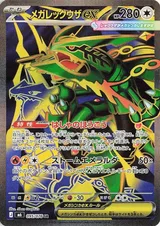
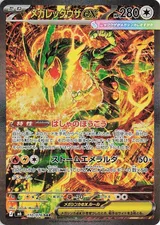 Mega Rayquaza ex110
 M6: Storm Emeralda110 · Special Art Rare